In celebration of International Women and Girls in Science Day on 11 February, the Iimbovane team hosted a Girls in Science Day at Stellenbosch University for 20 Grade 11 learners from Luhlaza High School.
Women in Conservation Science
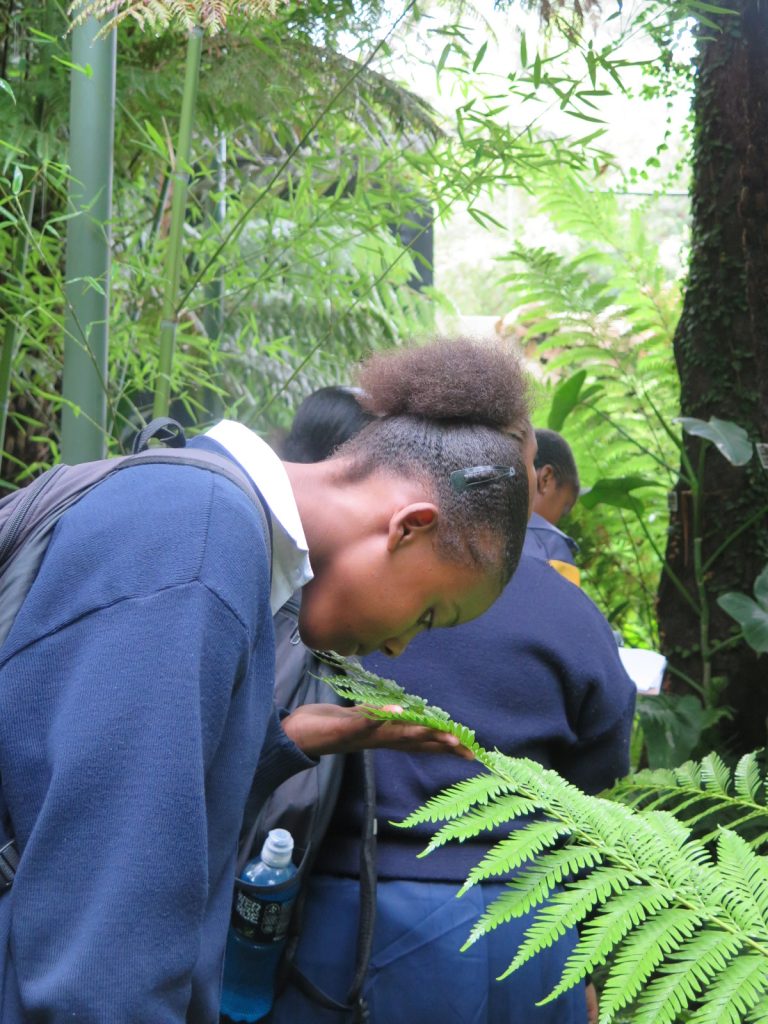
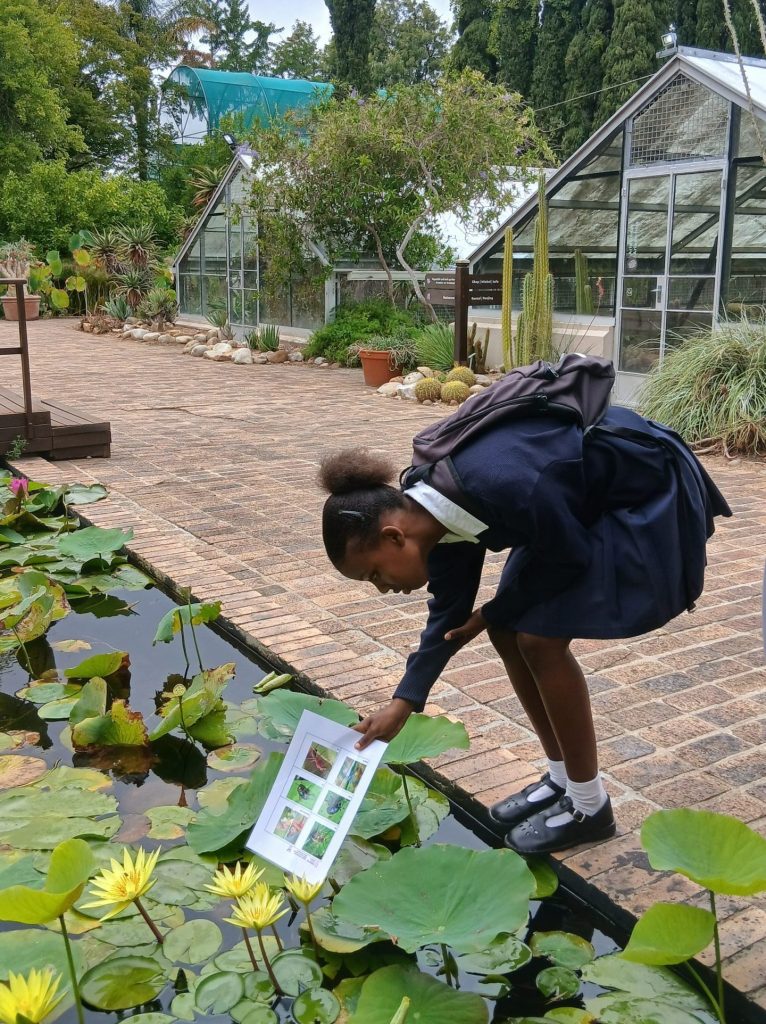
The day began at the Stellenbosch University Botanical Garden, where learners participated in a plant diversity activity. Working in groups of 5, they explored different South African biomes represented in the garden along with diverse plant growth forms, investigated ecosystem interactions, and observed pollination in action at the lily pond.
 |
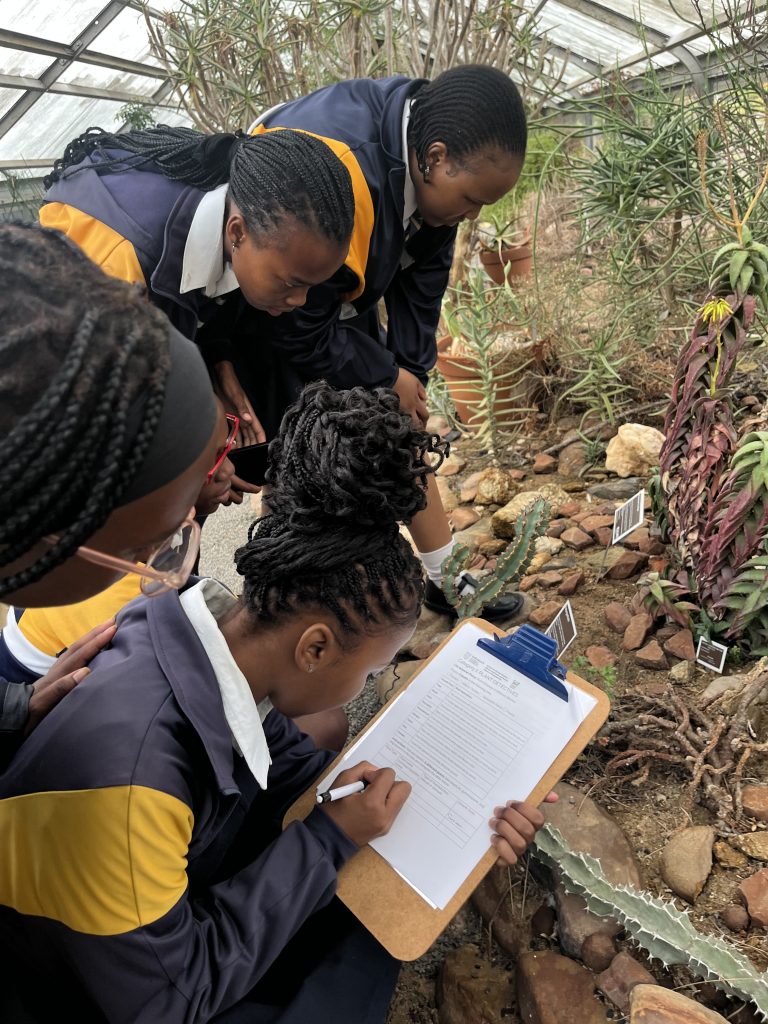 |
The activity focused on major plant groups that learners will study in Grade 11 Life Sciences, including pteridophytes, gymnosperms, and angiosperms, helping them connect classroom theory with real-world examples. The pollination observation activity and demonstration are also closely linked to plant reproduction, another key topic that these learners will cover in the first half of the school year.
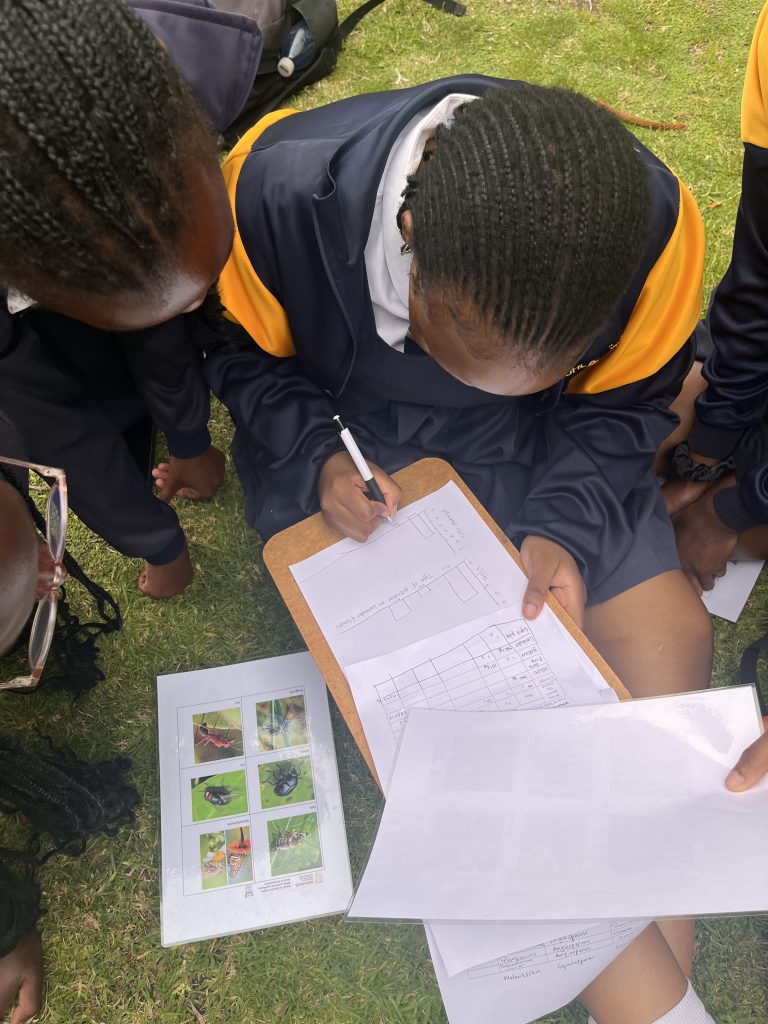
During the pollinator study, the learners recorded the number of visits by different pollinators to various colour groups of water lilies in the pond. A specific colour lily was observed over a five-minute interval. Among the different-coloured lilies, the results showed that white lilies attracted the most pollinators, with bees the most frequently observed visitors.
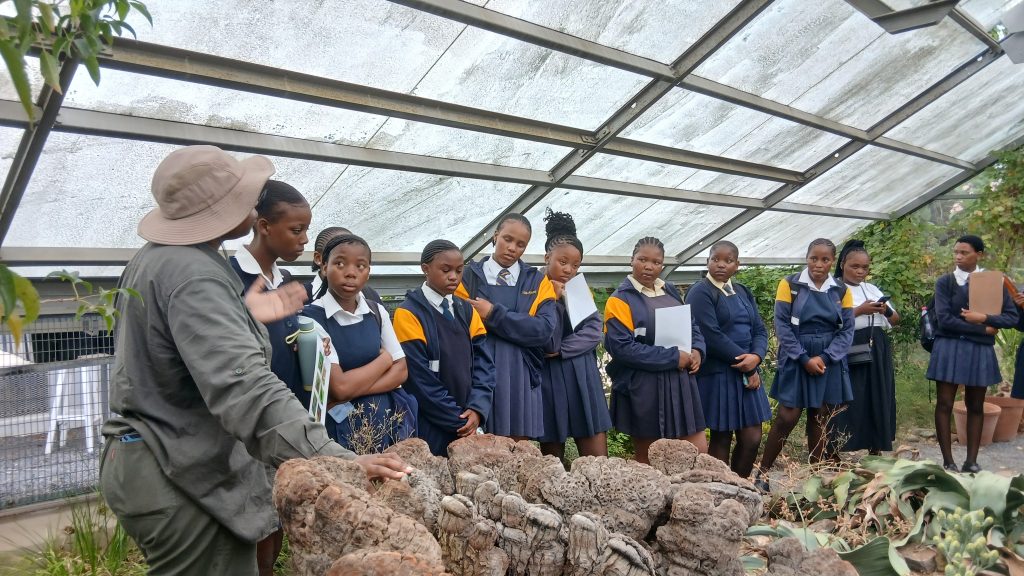
A highlight of the day was a demonstration of hand pollination of Welwitschia mirabilis— an extraordinary plant species and one of the oldest cultivated specimens in the garden. The learners were amazed to discover that the Welwitschia is approximately 100 years old, making it the oldest specimen grown in cultivation. They were equally fascinated to learn that some of the seedlings began growing in 1999 — making these “baby” plants older than the learners themselves.
Learners also had the opportunity to hear from Amanda Mahlungulu, a Conservation Horticulturist at the garden, who shared insights into her studies and her experiences working in plant science and conservation.
 |
 |
 |
|
Women in Antarctic Science
The second part of the day was presented by Ms. Ria Olivier, Principal Investigator of the Antarctic Legacy of South Africa, who gave the learners a brief history of South Africa’s presence in Antarctica. She further explained the different research fields in Antarctic science to the learners and introduced them to South African women scientists who have made their mark in Antarctic research.
Through the garden, practical and talking to various women scientists, the day was meant to encourage curiosity, confidence, and a sense of belonging in STEM fields.
