
SEARCH
  • [:en]Recent Posts[:af]Onlangse bydraes

  • [:en]Categories[:af]Kategorieë

  • [:en]Archives[:af]Argiewe

Green IT

New building, new timesNuwe gebou, nuwe tye

Friday, September 4th, 2015

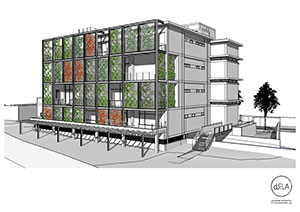
it-gebouSince the 80s the Information Technology department has been located in a section of the Engineering faculty, just off Banhoekweg. Some of us have grown old with the building and became part of the furniture over time.

We are happy, ecstatic and enthusiastic to announce that this will change over the next two months. Yes, we are uprooting all our staff and in a mission of epic proportions relocating to a brand-new building where we will be rubbing shoulders with our new neighbours, Facilities Management. You can read more about our new, green home here and also in September’s issue of Kampusnuus.

As exciting as this new development is, there are also some logistic wrinkles that need ironing. Once they are ironed out, however, we’ll be providing a more convenient, streamlined service to everyone on campus.

Since we will now be even further away from central campus, the IT HUB, our current student centre, will become an additional service point. No longer do you have to lug that massive PC box across campus to the IT building and sprain an elbow doing so. You can now get assistance for your personal devices, as well as asset number PC (SU equipment) at the IT HUB. It works as follows:

SU equipment (with asset numbers and warranties)

Staff are welcome to drop their equipment off at the IT HUB if it suits them better. Just keep in mind this might cause a delay in service of at least a day. These include laptops and desktop PCs where a warranty is concerned.

All equipment will still be serviced at the main IT building, but minor adjustments, for example registering a device on the network, passwords, etc. can be done at the IT HUB.

Personal devices (no asset number or warranty)

Staff’s personal devices will be handled at the IT HUB or IT Workshop at a nominal fee. For a fee, staff can register 5 personal devices (e.g. smart phones, tablets and laptops) on the network. These devices will receive limited support at the IT HUB.
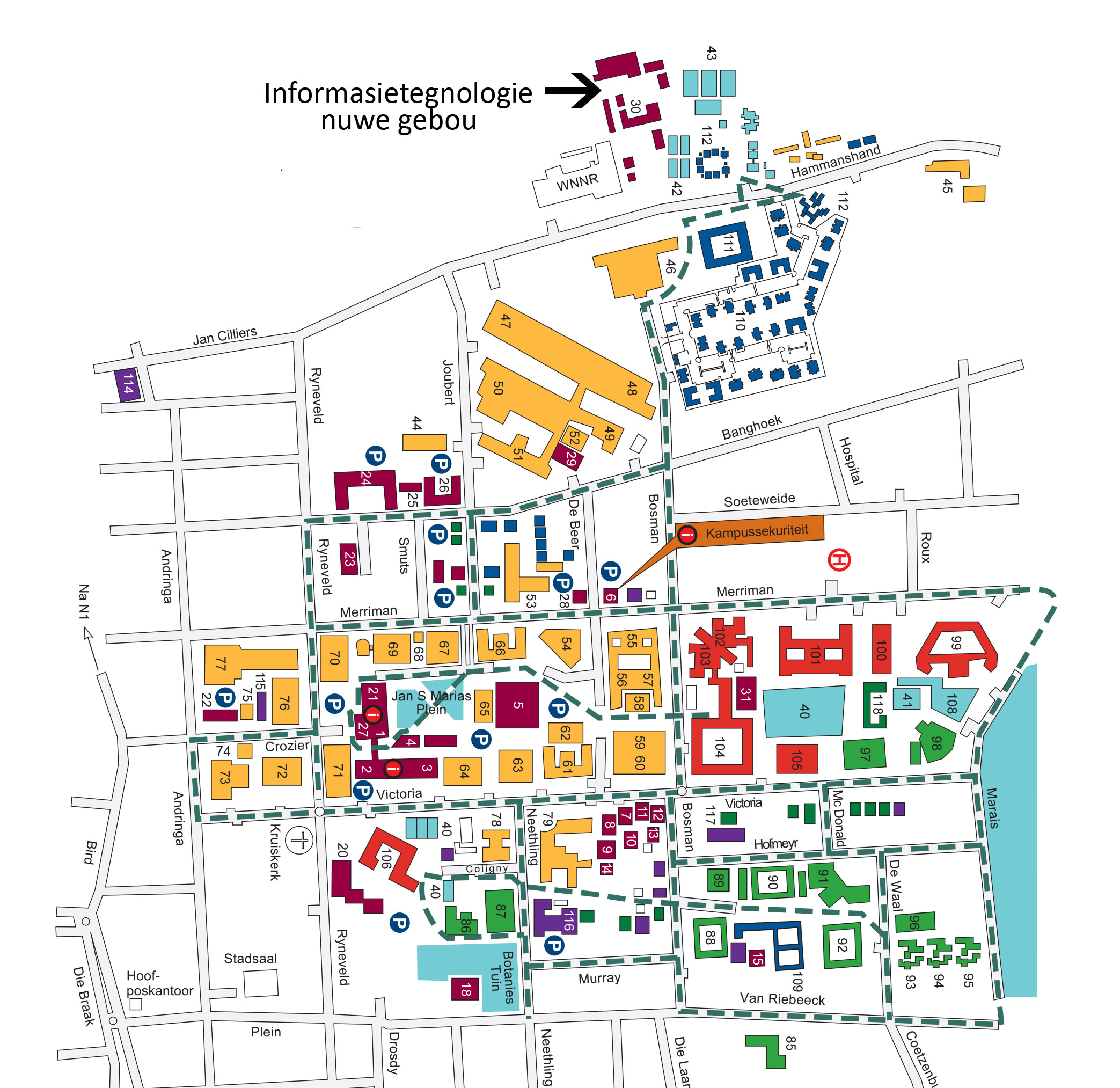
kaartWe will still be at your disposal through all the other channels and you can contact our service desk here:

Tel:  021-808 4367
Skype: ITStellenUni
E-mail: helpinfo@sun.ac.za (for general enquiries) or help@sun.ac.za (to log an error)
Twitter: @itstellenuni

Google Maps

Full instructions on how to log an error is available here. Please supply the correct information otherwise the call will not register on the system.

All our services are listed on our Service Catalogue and if you are brave enough, you can consult our Self-help wiki.

it-gebou

Sedert die 80s word die Informasietegnologie afdeling gehuisves in ʼn gedeelte van die Ingenieursfakulteit in Banhoekweg. Sommige van ons het oud geraak saam met die gebou en is feitlik deel van die meublement. 

Maar is ons opgewonde, erg gelukkig en entoesiasties om aan te kondig dat dit binne die volgende twee maande gaan verander. Ja, ons ontwortel al ons personeel en, in ʼn missie van epiese proporsies, skuif ons na ʼn nuwe gebou waar ons ʼn buurt gaan deel met Fasiliteitsbestuur. Jy kan oor al die fynere detail oor ons nuwe, groen tuiste hier lees en ook in die September-uitgawe van Kampusnuus. 

So opwindend soos hierdie nuwigheid is, is daar ook `n paar logistiese kreukels wat nog uitgestryk moet word. Sodra die strykwerk klaar is, sal ons ʼn meer gerieflik en vaartbelynde diens aan almal op kampus bied. 

Aangesien ons verder weg sal wees van die sentrale kampusarea, sal die IT HUB, ons huidige studentesentrum, ook funksioneer as ʼn addisionele dienspunt. Jy hoef nie meer daai massiewe rekenaarboks oor kampus te sleep na die IT-gebou en jou skouer te verrek in die proses nie. Jy kan nou hulp kry met jou persoonlike toestelle, sowel as batenommer rekenaars (US-toerusting) by die IT HUB. Dit sal as volg werk: 

US-toerusting (met batenommers en waarborge)

Personeel is voortaan welkom om hul toerusting by die IT HUB af te gee. Hou net in gedagte dat dit moontlik ʼn dag langer mag neem as normaalweg indien dit vir herstelwerk na die hoof-werkswinkel geneem moet word. Hierdie toerusting sluit in, skootrekenaars en tafelrekenaars wat onder waarborg is.

Alle toerusting word steeds herstel by die hoof IT-gebou, maar kleiner funksies soos die registrasie van toestelle, wagwoorde, ens. kan onmiddellik by die IT HUB gedoen word.

Persoonlike toerusting (geen batenommer of waarborge)

Personeel se persoonlike toerusting kan hanteer word by die IT HUB of IT-werkswinkel teen `n minimale fooi. Vir hierdie fooi, kan personeel 5 persoonlike toestelle (byvoorbeeld slimfone, tablette en skootrekenaars) op die netwerk registreer. Daar sal beperkte ondersteuning aan die toestelle gebied word.  

kaartOns sal steeds, soos altyd, tot jou beskikking wees deur middel van die gewone kanale en jy kan ons dienstoonbank op enige van die onderstaande metodes kontak:

Tel:  021-808 4367
Skype: ITStellenUni
E-pos: helpinfo@sun.ac.za (vir algemene navrae) of help@sun.ac.za (om ʼn fout aan te meld)
Twitter: @itstellenuni

Google Maps

Volledige instruksies vir die aanmelding van ʼn fout is hier.  Onthou asb. om die korrekte inligting te verskaf anders kan die fout nie aangemeld word op die stelsel nie.  

Al ons dienste is gelys op ons Dienskatalogus en as jy braaf genoeg is, kan jy ook kyk of jy jou probleem kan oplos met die hulp van ons Self-help wiki.



New IT building – greenest on campusNuwe IT-gebou – groenste op kampus

Friday, May 15th, 2015

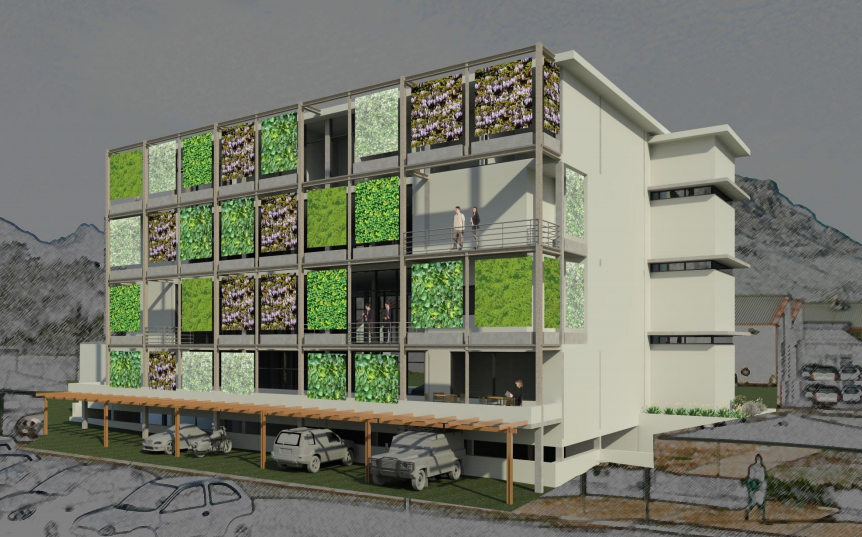
In September the Information Technology (IT) division will enter a new era. Not only will we be moving to a new building, our new home will also be the first truly “green” building on campus.

A wide range of sustainability characteristics have been incorporated in the new building’s design and can be considered according to the Green Building Council of South Africa’s Green Star Office rating tool categories.

Energy efficiency and renewable energy: Solar photovoltaic energy generation on the roof; optimal northern orientation and window sizing; shading elements; vertical garden on the northern aspect to minimise heating and cooling; usage of river water for cooling; low energy lighting and smart lighting.

Indoor environment quality (IEQ): Natural lighting; ventilation; minimisation of noise.

Transport: Bicycle store and facilities for cyclists; optimal parking spaces.

Innovation: The vertical garden; the use of river and rainwater for air-conditioning plant cooling.

The building should not be seen as merely a space hosting a department, but also an integral part of the IT Division’s work system – the people, processes they execute and the spaces and facilities of the building all form an integrated whole.

The building can contribute to the goal of creating a new working culture, establishing new work methods and, above all, encouraging collaboration and communication.

Developing new ways of working and a different work culture is now more important than ever as we find ourselves in the Information Age. As the focus shifts to the application of information and communication technologies (ICT) within Stellenbosch University’s strategy, the IT Division has to be able to meet higher expectations. The new building can be viewed as a tool, amongst others, to help meet these expectations.

The nature of knowledge work in the Information Age, in which the IT Division engages, is increasingly team-oriented, social, requiring intensive communication, interactions, knowledge sharing, continuous learning and consultation. The ability to collaborate, breaking out of siloed thinking, effective networking and flexibility become valued capabilities.

The new building features large “open plan” working areas with abundant natural lighting and tracts of glass – much like the campus facilities of admired technology companies such as Google and Apple. Quality, utility and flexibility of furnishings and fittings are also vital as teamwork requires flexible furnishings that can be altered easily and quickly to accommodate new work areas.

Adequate, well-resourced meeting spaces and breakaway areas are required in order to achieve a balance between shared and private workspace in innovative ways. Digital communications facilities in these spaces must make remote working and virtual meetings easy and effective.

Finally, the work environment must be healthy, encourage creativity and collaboration and must be a place where people want to work and spend time.  A working environment that is welcoming, open and does not reinforce hierarchies and promotes flexibility and communication will contribute to the transition to a next-generation IT Division.

[ARTICLE: RALPH PINA]

In September 2015 betree die Informasietegnologie-afdeling `n nuwe era. Nie net skuif ons na `n nuwe gebou nie, maar ons nuwe tuiste is ook die eerste volwaardige “groen” gebou op kampus.

`n Wye reeks volhoubare eienskappe is in die gebou se ontwerp geïnkorporeer en kan volgens die Green Building Council of South Africa’s Green Star Office se lys kategorieë gemeet word.

Energie-effektiwiteit en hernieubare energie
Foto-voltaïese sonpanele op die dak; optimale noordelike orientasie en venstergroottes; skadu-elemente; `n vertikale tuin aan die noordelike kant om hitte te minimaliseer en verkoeling te gee; gebruik van riverwater vir verkoeling en lae energie en slim beligting.

Kwaliteit van binneshuise omgewing (IEQ)
Natuurlike lig; ventilasie en geraasvermindering.

Vervoer
Fietsstoor en fasiliteite vir fietsryers; optimale hoeveelheid parkeerplekke.

Innovasie
Vertikale tuin, gebruik van rivier en reënwater vir lug- en perseelverkoeling.

Die gebou nie net `n kantoor wat `n afdeling huisves nie, maar is ‘n integrale deel van IT se werkstelsel – die mense, hul prosesse en die ruimtes en fasiliteite in die gebou, vorm ‘n integrale eenheid.

Met die inbruikneming van die nuwe gebou word daar beoog om `n nuwe werkskultuur te bepaal, veranderings in werkswyses te bewerkstellig, en veral samewerking en kommunikasie te bevorder.

Die ontwikkeling van nuwe werkswyses en `n nuwe kultuur is nou belangriker as ooit in die Informasie-Era waarin ons onsself bevind. Soos die fokus toenemend skuif na die toepassing van informasie en kommunikasietegnologieë (IKT) binne die US-strategie, word daar hoë verwagtinge gestel aan Informasietegnologie. Die nuwe gebou kan gesien word as `n potensiële hulpmiddel in die aanpassing van die werkskultuur.

Werk in vandag se Informasie-Era is toenemend meer spangeorienteerd, sosiaal, kommunikasie-intensief, interaktief, vereis kennisuitruiling en voortdurende leer en konsultasie. Gevolglik bestaan die nuwe gebou uit groot, oopplan werksareas met volop natuurlike lig en glaspanele – soortgelyk aan die kantore van Google en Apple.

Ook meublement moet in lyn wees met nuwe werkswyses. Spanwerk vereis buigbare toebehore wat maklik en vinnig die werkspasie-uitleg kan verander. Doelmatige vergader- en wegbreekareas moet toegerus wees om `n balans te bied tussen gedeelde en privaat werksareas. Digitale kommunikasiefasiliteite in hierdie areas moet virtuele vergaderings en die vermoeë om van elders te werk, maklik en effektief maak.

Laastens moet die werksplek gesond wees, kreatiwiteit en samewerking bevorder en `n plek wees waar mense wìl werk en tyd spandeer. Met ander woorde, `n werksomgewing wat verwelkomend en oop is, nie hierargieë afdwing nie en buigsaamheid en kommunikasie bevorder. Dit opsigself sal lei tot die oorgang na `n volgende generasie IT-afdeling.

[ARTIKEL: RALPH PINA]

New IT building: What is a place of work?Nuwe IT-gebou: Wat is ‘n werksplek?

Thursday, December 11th, 2014

Our fairly intensive participation in the design process for the new IT building got me thinking about what a place of work is and why a knowledge New IT building NW perspectiveorganisation, like an IT division, would have one. The new building is essentially an office building: it will not house technical infrastructure such as the data centre, but will be the place of work for the division’s engineers, system administrators, technicians, architects, analysts, software developers, managers, etc.

Besides the admittedly exciting “green” design features, such as the vertical garden, optimal orientation, solar PV panels, rainwater harvesting, bicycle store, and various other efficiency elements that will make it far more energy-efficient  and sustainable than other buildings of its type, the other intriguing possibility that it presents is the opportunity to influence change in the culture of the IT division. The catalyst for this “change of culture” could be the university’s new norms that require that all new office buildings be “open plan”. For an organisation that has become accustomed to being housed for the past 25 years in what can only be described as a “rabbit warren” of cellular offices leading off dark, desolate corridors, this is a radical departure. There seems to be much trepidation and negativity about our “open plan” future, some of which at least is simply related to humans’ default discomfort with change of any sort 1.

Hierdie artikel is tans slegs in Engels beskikbaar.


(more…)

E-waste programme still going strongE-afval inisiatief steeds volstoom aan die gang

Friday, May 24th, 2013

The IT Division’s e-waste programme continues to quietly do the right thing behind the scenes.
During the period July 2012 to April 2013, Cape e-Waste Recyclers, our e-waste contractors, removed the following items from the on-campus e-waste depot for responsible disposal and recycling:

  • 325 Computers
  • 162 Printers and Scanners
  • 269 Monitors
  • 3 boxes of general e-waste.

Remember, if you have any e-waste lying around at home or in your office, contact us and we’ll help you to get rid of it without harming the environment.

The procedures by which IT assets should be decommissioned and placed into the e-waste stream are detailed on the IT Help wiki: e-Waste Procedures.


IT se e-afval program is stilweg steeds op die agtergrond besig om die regte ding te probeer doen. 

Vanaf Julie 2012 tot April 2013 het  Cape e-Waste Recyclers, ons e-afval kontrakteurs die volgende items van ons kampus verwyder vir verantwoordelike wegdoening en herwinning: 

  • 325 rekenaars
  • 162 drukkers en skandeerders
  • 269 Monitors
  • 3 houers van algemene e-afval

Onthou, as jy enige e-afval by jou kantoor of huis het en nie weet wat om daarmee te maak nie, kontak ons gerus en ons kan jou help om op `n omgewingsvriendelike manier daarvan ontslae te raak!  

Die prosedures om IT-bates uit diens te haal en in die e-afval stroom te plaas is op die IT Help wiki beskikbaar: e-Afval Prosedures.


Cybermeetings the way of the future?Kuberkonferensies ons voorland?

Friday, March 23rd, 2012

Chicken or beef? Just imagine not exposing yourself to dodgy airplane meals and lost luggage anymore? Nowadays there’s really little need to fly thousands of kilometeres for an one hour meeting. More and more businesses are starting to make use of virtual meetings to save money and to lighten their carbon footprint.

Ok, let’s start from the beginning. So what does the term carbon footprint actually mean?

Every human being has their own carbon footprint, whether you are an individual, part of a large corporation or a manufacturer of goods. Your daily activities and everything you do has an impact on the environment. Your carbon footprint is a measure of this impact and can be calculated based on your food, travel, purchases and how you deal with waste. (If you want to find out what yours is, use the Carbon Footprint Calculator)

There are many ways of reducing your carbon footprint and making sure you tread lightly every day. Conferences and meetings are just two of these.

Ask yourself whether it’s really necessary to attend the meeting or conference? According to Dave Rochlin of ClimatePath most events can generate more than a ton of CO2 per attendee. This includes air travel (about 90% of the carbon footprint), paper usage, conference material and catering. According to research done by ClimatePath a conference’s carbon footprint can be reduced by 90 percent by hosting the meeting virtually. One company, Manpower, avoided 400,000 pounds of CO2 emissions by holding its annual Global Leadership Team meeting virtually, which reduced air travel by one million miles!

Modern technologies such as video conferencing can help lower the carbon footprint of meetings. An initial investment in tele- and video-conferencing facilities will reduce the need for flights saving money, time and carbon emissions. But the installation of possibly expensive technology isn’t a necessity. A virtual meeting can easily be conducted via Skype within an hour – the same meeting in a different location would’ve been more costly and time-consuming as well.

If it’s not possible to conduct a meeting via video conferencing, some measures can still be taken to lessen the impact on the environment. Some handy hints on conferencing can be found on The National Conference Centre’s blog so next time you attend a conference, make sure you tread lightly.Hoender of bief? Sal dit nie salig wees om nie meer jouself bloot hoef te stel aan suspisieuse vliegtuigmaaltye en verlore bagasie nie? Deesdae is dit nie meer nodig om kilometers ver te vlieg vir `n een uur vergadering nie. Meer en meer besighede maak gebruik van virtuele konferensies om geld te spaar en terselfdertdyd hul koolstof-voetspoor ligter te maak.

Goed, maar kom ons begin by die begin. Wat beteken dit as almal verwys na jou “carbon footprint”?

Elke persoon het sy eie voetspoor (“carbon footprint”), of jy `n individu is, deel van `n groot maatskappy of `n vervaardiger van goedere. Jou daaglikse aktiwiteite en alles wat jy doen het `n impak op die omgewing rondom jou. Jou voetspoor is die maatstaf van hierdie impak en kan gemeet word volgens jou eetgewoontes, hoe jy reis, wat jy koop en natuurlik hoe jy ontslae raak van al jou rommel. (As jy graag wil weet hoe diep jy jou spoor trap, gaan kyk by Carbon Footprint Calculator.)

Daar is verskeie maniere om jou impak te verlig en seker te maak dat jy met ligter treë op die aarde trap. Konferensies en vergaderings is bloot een hiervan.

Voor jy op `n vliegtuig spring vir `n vinnige uitstappie Johannesburg toe, vra jouself af of dit regtig nodig is om 1000+ kilometers te vlieg om hierdie vergadering by te woon? Volgens Dave Rochlin of ClimatePath kan die  meeste konferensies meer as `n ton CO2 per deelnemer genereer. Dit sluit in, reis (ongeveer 90% van die voetspoor), papiergebruik, konferensiemateriaal en spyseniering. Volgens navorsing gedoen deur ClimatePath can die impak op die omgewing met 90% verminder word deur bloot `n virtuele vergadering te hou. Een maatskappy, Manpower, het 400,000 pond se CO2 gasse vermy deur hul jaarlikse  “Global Leadership Team”-vergadering virtueel aan te bied en ook lugreise met een miljoen myl verminder!

Met hedendaagse moderne tegnologie soos videokonferensiefasiliteite word dit al makliker om die “carbon footprint” van vergaderings te verminder. Die aanvanklike onkoste om tele- en videokonferensiefasiliteite aan te koop, sal die nodigheid om te vlieg verminder en daarmee saam geld, tyd en uitlaatgasse spaar. Die installasie van moontlike duur tegnologie is egter nie nodig nie. ‘n Virtuele vergadering kan net so maklik met Skype afgehandel word binne `n fraksie van die tyd.

Indien die bywoning van `n vergadering of konferensie elders nie moontlik is nie, is daar egter steeds maniere om te verseker dat jou impak so laag moontlik is. Die The National Conference Centre’s blog het `n paar handige voorstelle. Gaan loer gerus en maak seker jy gaan vergader volgende keer ligvoets.