SEARCH
  • [:en]Recent Posts[:af]Onlangse bydraes

  • [:en]Categories[:af]Kategorieë

  • [:en]Archives[:af]Argiewe

Internet

From tarred hemp and Indian rubber to optical fibreVan teer-hennep en Indiese rubber tot optiese vesel

Friday, November 20th, 2015

The internet began to emerge in the late 1980s and early 90s. However, the infrastructure supporting it has been around since 1839.

Today most of our Internet traffic is carried via submarine cable systems from Europe and the United States.

A submarine communications cable is a laid on the seabed between land-based stations to carry telecommunication signals across stretches of ocean. Before internet, however, submarine cables were used for other types of communications, for example telephones and telegraph.

After the introduction of the telegraph in 1839, establishing a submarine line across the Atlantic Ocean became the next challenge. Samuel Morse accepted this challenge and in 1842 he succeeded in sending a telegraph through a wire insulated with tarred hemp and Indian rubber, which was submerged in the water of New York Harbour.

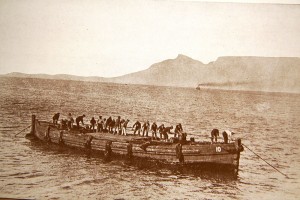
Laying-undersea-cable-Cape-Town
Laying an undersea cable in Cape Town (Photo credit: Telkom)

The first submarine cable system in South Africa was launched in on 27 December 1879 and for the first time we were directly connected to Europe. This was done via Durban and Zanzibar to Aden with the East Coast cable of the South African Telegraph Company.

Today’s cables use optical fibre technology to carry digital data, which includes telephone, Internet and private data traffic.

“Modern cables are typically about 25 millimetres in diameter and weigh around 1.4 kilograms per metre for the deep-sea sections which comprise the majority of the run, although larger and heavier cables are used for shallow-water sections near shore.” (https://en.wikipedia.org/wiki/Submarine_communications_cable)

Over the past 15 years four submarine cable systems have been installed in South Africa for telecommunication – SAT-3/WACS, Seacom, WACS, and EASSy.

The most recent addition was made in May 2012 with the West Africa Cable System (WACS). The 17 200 km fibre optic submarine cable starts at Yzerfontein on the west coast and ends in the United Kingdom. (More about the WACS launch)

[SOURCES: www.mybroadband.co.za & https://en.wikipedia.org]

Die internet het sy opwagting gemaak in die laat 1980s en vroeë 90s. Die infrastruktuur wat dit ondersteun is egter al sedert 1839 beskikbaar.

Vandag word ons internetverkeer hoofsaaklik gefasiliteer deur ondersese kabelstelsels vanaf Europa en Amerika.

ʼn Ondersese kommunikasiekabel word op die seevloer tussen stasies op land gelê, met die doel om telekommunikasie seine oor gedeeltes van die oseaan stuur. Voor die internet is hierdie kabels gebruik vir ander tipes kommunikasie, byvoorbeeld telefone en telegramme. 

Laying-undersea-cable-Cape-Town
Lê van `n ondersee kabel in Kaapstad
(Foto krediet: Telkom)

Na die ontwikkeling van die telegraaf in 1839, het die moontlikheid van ʼn ondersese lyn oor die Atlantiese oseaan na ʼn sterk moontlikheid begin lyk. Samuel Morse het in 1842 dit reggekry om, onderwater in New York se hawe, ʼn telegram te stuur met ʼn draad geïsoleer met teer-hennep en Indiese rubber.

Die eerste ondersese kabel in Suid-Afrika is op 27 Desember 1879 van stapel laat loop en vir die eerste keer is Suid-Afrika direk verbind aan Europa. Die verbinding is moontlik gemaak deur die East Coast cable of the South African Telegraph Company via Durban en Zanzibar na Aden. 

Vandag optiese vesel tegnologie gebruik om digitale data te versend en dit sluit telefone, internet en private dataverkeer in. 

Moderne kabels is gewoonlik ongeveer 25 millimeter in deursnee en weeg ongeveer 1.4 kilogram per meter vir die gedeeltes diep onder die see, wat die grootste deel in beslag neem en groter en swaarder kabels vir die vlakwater gedeeltes naby die strand.

Die jongste toevoeging tot ons telekommunikasie infrastruktuur is gemaak in Mei 2012 met die aanlê van die West Africa Cable System (WACS). Die 17 200 kilometer vesel optiese kabel begin by Yzerfontein aan die weskus en eindig by die Verenigde Koninkryk. (Meer oor die WACS-stelsel)


[BRONNE: www.mybroadband.co.za & https://en.wikipedia.org]

Facebook: the grass isn’t greenerFacebook: die gras is nie groener nie

Friday, November 6th, 2015

In the 80s, if you wanted to see your neighbours shiny new BMW, you had to pretend you were trimming the lavender hedge. Now evidence of his latest acquisition is for all to see on his Facebook wall.

You watched in envy as the youngest Petersen from across the road, carried beach umbrellas and beach bats to their car in preparation for their Natal South Coast holiday.

We still envy others. The scope is just considerable larger thanks to social media like Facebook. Sure, thirty years ago you knew what your neighbours were up to. But now you also know about your long lost cousin in Australia’s diving expedition on the Great Barrier Reef or your school friend’s apparently successful business – the same friend you haven’t seen in 20 years.

In 2013 Ethan Kross, a psychologist from the University of Michigan did research on a group of students and came to the conclusion that using Facebook made them alone and sad. Kross and his colleagues studied their subjects over two weeks and frequently asked them questions to establish their mental state. (Facebook use predicts declines in subjective well-being in young adults: Kross E, Verduyn P, Demiralp E, Park J, Lee DS, Lin N, et.al (2013))

Does this mean social media is inherently bad for us? Not entirely, but we need to be attentive as to how we use it and its effect on our lives.

As early as 1998 Robert Kraut, a researcher at Carnegie Mellon University found that subjects became progressively more depressed and isolated when they spent more time on the internet. The cause for our addiction to social media lies in our innate social make-up. We want to make connections with other people, but inevitably we also end up compare our lives to theirs.

Sharing information activates the part of our brain associated with reward processing. Sharing with others is a normal, acceptable, social action, passively being exposed to a large amount of information about those we are connected to on social media, and would normally not even be aware of, is not. What we don’t realise is that this information has been carefully selected and posted to present the best possible image. It’s not a realistic representation of someone’s life.

According to Mai-Ly Steers’ article “Seeing Everyone Else’s Highlight Reels: How Facebook Usage is Linked to Depressive Symptoms”, published in the Journal of Social and Clinical Psychology, social comparison is nothing new. Social media’s arrival just intensified the phenomenon.

“It doesn’t mean Facebook causes depression, but that depressed feelings and lots of time on Facebook and comparing oneself to others tend to go hand in hand”, says Steers.

[SOURCES: www.livescience.com; www.sciencedaily.com; www.newyorker.com; http://blogs.plogs.org]


As jy in die 80s jou buurman se blink-nuwe BMW wou sien, moes jy maak asof jy die laventel-heining snoei. Deesdae is sy Facebook-muur besaai met fotos van sy kopie.

Jy’t mismoedig geraak toe jy gesien het die jongste Petersentjie oorkant die pad dra alweer strandsambrele en -rakette aan kar toe vir hul Natalse Suidkus-vakansie.

Ons beny nogsteeds ander. Die omvang is net groter as gevolg van sosiale media platforms soos Facebook. Hoewel jy dertig jaar gelede van jou bure se doen en late geweet het, weet jy nou ook van jou langverlore neef in Australië se vakansie by die Great Barrier Reef of die skoolmaat – wat jy 20 jaar gelede gesien het – se oënskynlik suksesvolle besigheid. 

In 2013 het Ethan Kross, ʼn sielkundige van die Universiteit van Michigan, na aanleiding van sy navorsing, bevind dat Facebook `n groep studente wel hartseer en alleen laat voel het. Oor ʼn tydperk van twee weke het Kross en sy kollegas ʼn groep studente bestudeer, vrae gevra en tot hierdie gevolgtrekking gekom. (Facebook use predicts declines in subjective well-being in young adults: Kross E, Verduyn P, Demiralp E, Park J, Lee DS, Lin N, et.al (2013))

Beteken dit dat sosiale media inherent sleg is vir ons? Nie heeltemal nie, maar ons moet let op hoe ons dit gebruik en watter invloed dit op ons lewens het. 

Reeds in 1998 het Robert Kraut, ʼn navorser by die Carnegie Mellon Universiteit, bevind dat mense meer alleen en depressief raak hoe meer tyd hulle op die internet spandeer. Die rede hiervoor lê in die mens se ingebore sosiale aard. Ons wil konneksies maak met ander, maar daarmee saam is dit onvermydelik dat ons onsself vergelyk met ander. 

Hoewel die deel van inligting met ander mense die area van ons brein aktiveer wat gepaard gaan met belonings en bevrediging, word ons ook blootgestel aan ʼn magdom inligting oor die mense aan wie ons verbind is op sosiale media: inligting waarvan ons andersins nie van bewus sou wees nie. Ons besef nie dat hierdie inligting baie fyn uitgesoek en selektief geplaas word om net die beste beeld voor te hou nie. Dis nie realisties nie.

Volgens Mai-Ly Steers se artikel, “Seeing Everyone Else’s Highlight Reels: How Facebook Usage is Linked to Depressive Symptoms”, gepubliseer in die Journal of Social and Clinical Psychology is die konsep van vergelyking op sosiale vlak niks nuuts nie. Die koms van sosiale media sfeer vergroot egter die speelveld. 

“It doesn’t mean Facebook causes depression, but that depressed feelings and lots of time on Facebook and comparing oneself to others tend to go hand in hand”, sê Steers.


[BRONNE: www.livescience.com; www.sciencedaily.com; www.newyorker.com; http://blogs.plogs.org]


ONTAPtv.com launches in South AfricaONTAPtv.com bekendgestel in Suid-Afrika

Wednesday, September 23rd, 2015

ontaptvLast month we reported on the future of television and looked at the main role players on the VOD (video on demand) field – Naspers’ Showmax, VIDI and FrontRow.

Barely a month later, last Wednesday, a new contender, ONTAPtv.com, was announced. And with packages starting at R39-00 it will be an attractive choice if you need to keep your budget in check.

Standard packages include a family package with family friendly content, one for just TV series, one for the movie buffs, a package for over 16s and a Mega Pack, which includes all these options. Package are R69-00 per month, but you can also subscribe to two per month at a cost of R79-00 or opt for the Mega Pack at a monthly fee of R89-00.

Apart from the local content, ONTAPtv provides the opportunity to watch specific African content at R39-00, Chinese television (nowTV) at R88-00 and FightSports at R69-00 per month.

Alternatively, if you don’t feel like committing just yet, you can just download movies at R15-00 (old movies) and R25-00 (new releases). Just like ShowMax you don’t have to sign your name away immediately – ONTAPtv does provide a trial period to ensure you are happy with your selection.

What makes ONTAPtv different from other VOD choices, is the option to download your chosen content instead of watching it online. Series and movies are also available in lower resolution to save bandwidth.

ONTAPtv.com is accessible via the service’s web platform and is currently compatible with PC, Mac, iOS- and Android devices. The platform was built with Firefox, Internet Explorer and Safari in mind. At the moment it does not support on Google Chrome, but this might change in the future.

[SOURCES: www.memeburn.com]


ontaptvVerlede maand het ons berig oor die toekoms van televisie en gekyk na die hoofspelers op die veld van VOD (video on demand) – Naspers se Showmax, VIDI en FrontRow. 

Skaars `n maand later, verlede Woensdag, is nuwe kompetisie aangekondig in die vorm van ONTAPtv.com. En met pakkette wat by R39-00 begin, is dit `n aanloklike opsie vir diegene wat hul begroting  dophou.

Standaard-pakkette sluit `n familiepakket in met familievriendelike inhoud,  een met slegs TV-reekse, een vir die fliekvlooie, `n pakket vir 16+ en `n Mega Pack wat alle hierdie opsies insluit. Elkeen is R69-00 per maand, maar jy kan ook vir twee inskryf teen R79-00 per maand of die Mega Pack vir R89-00 per maand.

Buiten plaaslike inhoud bied ONTAPtv ook aan jou die geleentheid om Afrika-spesifieke inhoud te kyk teen R39-00 per maand, Chinese televisie (nowTV) teen R88-00 per maand en FightSports teen R69-00 per maand.

Alternatiewelik, as `n maandelikse inskrywing vir jou te bindend is, kan jy altyd net flieks aflaai teen R15-00 (ouer flieks) en R25-00 (nuwe vrystellings). Net soos met ShowMax hoef jy nie dadelik jou naam of geld weg te teken nie – jy kan dit eers vir `n toetsperiode gebruik om seker te maak dit werk vir jou.

Anders as al die ander VOD-opsies, laat ONTAPtv sy kliënte toe om inhoud af te laai in plaas van om dit slegs aanlyn te kyk. Reekse en flieks is ook beskikbaar in laer resolusie om bandwydte te spaar.

ONTAPtv.com is toeganklik deur middel van die diens se webplatform en is tans versoenbaar met PC, Mac, iOS- en Android-toestelle. Die platform is gebou vir Firefox, Internet Explorer, en Safari. Op die stadium werk dit nog nie op Google Chrome nie, maar dit behoort in die toekoms te verander.

[BRONNE: www.memeburn.com]


The future of televisionDie toekoms van televisie

Friday, August 21st, 2015

On 5 January 1976 South Africans sat with bated breath in front of newly acquired television sets to bear witness to the first ever television broadcast. A lot has changed since then, including the addition of subscription services like DSTV.

Between 1976 and 1978 no ads were broadcasted and after years of using ad breaks to make coffee, we’re back to ad-free viewing with innovations like PVR and more recently VOD.

Video on demand (VOD) perfectly satisfies our demand for instant entertainment and series binge-watching. Up to last year the choices for VOD have been slim.

DSTV’s Box office online, a movie rental service for DSTV subscribers, was the first contender for a VOD audience. Soon others followed suit – Altech with Node, MTN with Frontrow and Times Media Group’s VIDI. When American entertainment provider Netflix announced they would be expanding their service to South Africa by the end of 2016, the race was on.

The biggest game changer occurred this past Wednesday when Naspers announced their entry with Showmax.

SHOWMAX

According to sources Showmax promises to be “…the new M-Net but for the internet age.” Two subscriptions are available – a premium and free option. The premium service will cost R99-00 per month and will include a host of popular series, as well as a combination of blockbusters and older movies.  Old South African series like Egoli, Binnelanders and Agter elke man are also listed on their menu. Whether this is a move towards a target audience or merely saving money in acquiring local productions, remains to be seen.

All you need to use Showmax is a minimum internet speed of 1MB and an internet browser. If you are unsure whether Showmax is for you, a 7 day trial period is available to test the water with first.

[SOURCE: www.mybroadband.co.za,  www.iafrica.com]

vidiVIDI 

Times Media Group launched VIDI in September last year and until Wednesday, they’ve been the biggest competition for Netflix locally.

A monthly subscription goes for R149-00 with unlimited viewing including a wide selection of movies and series. (Apparently more than 1000 worth’s viewing) Movies alone can also be rented at R27-00 for new and R15-00 for older releases.

Once again, a line with a minimum internet speed of 1MB is a prerequisite. Just remember that, if you prefer watching your sport and movies in HD on a big screen, 2 – 4 MB connections are a necessity.

The biggest advantage of VIDI, and all available VOD services, is the choice to watch movies or series whenever you want to, uninterrupted or not. If you can’t finish a movie, pause, stop or bookmark it and it will be added to your to-watch list.

Content can be watched on multiple platforms, including PC, Mac, laptop, Apple and Android tablets and smartphones. VIDI also adapts the quality of files according to your platform and bandwidth, so you should be saved from the frustration of buffering images.

[SOURCES: www.htxt.co.za, www.bizcommunity.co.za, www.sabc.co.za, www.tvsa.co.za and www.mybroadband.co.za]

FRONTROW

MTN initiative, Frontrow, was launched last year in September – a week after VIDI. Marketing has been extremely low-key and the main criticism is the limited viewing options. As should be expected from a cell phone provider, they focus on handheld devices. MTN does offer a package which includes mobile data.

But don’t take our word for it, rather read mybroadband’s review of Frontrow.

Currently VOD can’t compete with traditional broadcasting channels. DSTV alone accumulated up to five million subscribers over the past 5 years. Sport still remains the biggest drawing card – something which no VOD service caters for so far. However, television as we know it will have to adapt to keep up with technology.

I you are considering the VOD route for your home entertainment, read what the experts say about the current internet VOD options, the possible arrival of Netflix in 2016 and how they compare:

ShowMax, Netflix and SA’s disrupted TV future
Netflix could be game-changer in SA
Netflix vs FrontRow vs Vidi vs Node in South Africa

5 Januarie 1976  – Menige Suid-Afrikaner sit in afwagting voor nuut-aangekoopte televisiestelle vir die eerste televisie-uitsending. Intussen het heelwat water onder die brug geloop en ook subskripsie-dienste, soos DSTV, is deesdae algemeen.

Tussen 1976 en 1978 is geen advertensies tussen programme uitgesaai nie en advertensiebreuke was `n geleentheid om vinnig te gaan koffie maak. Vandag  is ons terug by advertensielose televisie met PVR en die meer onlangse nuweling VOD. 

Video per aanvraag (VOD) bevredig die groeiende behoefte vir onmiddellike vermaak en ononderbroke reekskykery, maar tot `n jaar gelede was die keuses maar skraps.

DSTV het eerste toegetree tot die geveg met Boxoffice online, `n fliek-verhuringsdiens vir DSTV-intekenare. Kort daarna het ander hul voorbeeld gevolg – Altech met Node, MTN met Frontrow en Times Media Groep met VIDI. Die laaste hupstoot na meer kompeterende dienste, was Amerikaanse reus Netflix, se aankondiging dat hulle beplan om teen einde 2016 in Suid-Afrika te wees.

En toe gooi Naspers finaal die jakkals in die hoenderhok Woensdag met Showmax, hulle VOD-diens. 

SHOWMAX

Volgens bronne kan Showmax beskou word as nie nuwe M-Net vir die internet-eeu. Twee intekenopsies is beskikbaar – premium en gratis opsie. Premium diens sal jou R99-00 per maand kos met `n verskeidenheid gewilde reekse, sowel as nuwe en ouer flieks. Ou Suid-Afrikaanse reekse soos Egoli, Binnelanders en Agter elke man verskyn ook op hul spyskaart. Of dit `n poging is om `n spesifieke demografie te wen of bloot om geld te spaar, is `n ander vraag.

Vir Showmax het jy `n lyn met internetspoed van ten minste 1MB en `n webblaaier nodig. `n Onbeperkte internetrekening mag waarskynlik ook handig te pas kom. 

As jy onseker is of jy dié roete wil volg, kan jy gerus wees – jy kan dit eers vir 7 dae toets voor jy besluit.

[BRONNE: www.mybroadband.co.za,  www.iafrica.com]

vidiVIDI 

Times Media-Groep het VIDI in September 2014 bekendgestel en tot Woensdag was dit die grootste plaaslike kompetisie vir Netflix. 

Die maandelikse fooi vir onbeperkte toegang tot reekse en flieks (klaarblyklik meer as `n 1000 uur s’n), is ietwat meer as Showmax teen R149-00 kos. Die voordeel is egter dat jy slegs flieks apart kan huur – R27-00 vir nuwe vrystellings en R15-00 vir ouer flieks. Kyk dit wanneer jy wil, maar sodra jy begin het, verval dit na 48 uur.

Soos met Showmax het jy ook `n lyn met internetspoed van ten minste 1MB en `n webblaaier nodig. As jy egter van jou sport en flieks in HD en op `n groot skerm hou, is 2 tot 4 MB `n noodsaaklikheid. 

Een van die grootste voordele van VIDI, en die meeste ander VOD-dienste, is dat jy jou kykgenot kan skeduleer soos jy wil, met, met onderbrekings of nie. As `n fliek te lank raak, kan jy dit stop, by jou lysie voeg en volgende keer kyk jy verder.  

Inhoud kan op verskeie platforms benut word, insluitende PC, MAC, skootrekenaars, Apple en Android tablette en slimfone. VIDI pas ook die kwaliteit van sy leêrs aan by die platform waarop jy kyk en jou bandwydte.

[BRONNE: www.htxt.co.za, www.bizcommunity.co.za, www.sabc.co.za, www.tvsa.co.za and www.mybroadband.co.za]

FRONTROW

MTN-initiatief, Frontrow, is bekendgestel in September 2014 – `n week na VIDI. Bemarking vir die diens was betreklik yl en die grootste kritiek op Frontrow is die beperkte keuse van materiaal en die ondersteunde platforms. Soos seker te verwagte kan wees van `n selfoonverskaffer, is die fokus op slimfone en tablette, nie op rekenaars of televisie nie. 

MTN bied wel `n pakket wat mobiele data insluit. Maar moenie ons woord daarvoor vat nie, lees gerus mybroadband se resensie van Frontrow.

Tans kan VOD nie op dieselfde vlak kompeteer as tradisionele uitsaaikanale nie. DSTV het alleen oor die afgelope 5 jaar 5 miljoen intekenare gewerf. Sport bly sport die grootste trekpleister  – iets waarvoor VOD-dienste nie voorsiening maak so ver nie. 

Alles ten spyt sal televisie en ons bestaande kykgewoontes moet verander om by te hou by tegnologie.

As VOD vir jou klink na die ideale vermaakoplossing, lees wat die deskundiges sê het oor jou opsies, die moontlike koms van Netflix in 2016 en hoe hulle vergelyk:

ShowMax, Netflix and SA’s disrupted TV future

Netflix could be game-changer in SA
Netflix vs FrontRow vs Vidi vs Node in South Africa

Think you’re safe online?Dink jy’s veilig aanlyn?

Friday, June 12th, 2015

Memeburn, a website specialising in tech news and analysis recently reported on the state of cyber security in South Africa. (Read the article here)

According to the article, it was announced during the 2015 Security Summit in Johannesburg that over the previous six month, South Africa was the most popular target in Africa for criminal cyber attacks. DDOS attacks in Africa also increased 150% over the past 18 months.

Antonio Forzieri, an executive at Symantec, stated that one out of 214 e-mail sent in South Africa last year, was a spear phishing attempt.

South Africans are losing R2.2 billion per year to cybercrime. Statistics like these emphasise the importance of being informed and careful with personal information.

Online sales are on the increase and providesan additional platform for cybercrime.

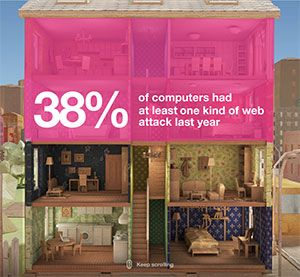
onedollarKaspersky Lab, a company renowned for their expertise in security, launched a new project which, in a very visual, simple and interactive way, demonstrates the danger of cyber threats.

The one dollar lesson is an animated website which shows what happens to your money when you shop online and your information is intercepted.

One dollar lesson also hosts three training modules – each of which shows one dollar’s virtual trip to the bank and the possible obstacles it can encounter along the way.

Don’t assume you know everything there is to know about cyber safety. Stay up to date on new cyber threats and be careful with your personal information.

Memeburn, `n webwerf wat spesialiseer in technuus en -analise, het onlangs berig oor die stand van kuberveiligheid in Suid-Afrika. (lees die volledige artikel hier)

Volgens die artikel is daar gedurende die 2015 Security Summit, in Johannesburg, bekendgemaak dat, in Afrika, Suid-Afrika die land is wat die afgelope ses weke die meeste deur kuberkrakers geteiken is. Hierbenewens het DDOS-aanvalle die afgelope 18 maande  met 150% toegeneem in Afrika.

Volgens Antonio Forzieri van Symantec was een uit elke 214 e-posse verlede jaar in Suid-Afrika gestuur, pogings om internetgebruikers se inligting te bekom.

Suid-Afrikaners verloor reeds R2.2 biljoen per jaar aan kubermisdaad. Statistieke soos hierdie benadruk weereens dat ons as internetgebruikers in Suid-Afrika meer ingelig en versigtig moet wees.

Terselfdertyd neem aanlynaankope toe en verskaf dit ‘n addisionele kanaal vir kubermisdaad om plaas te vind.

onedollarKaspersky Lab, `n maatskappy wat hulle roem daarop dat hulle sekuriteitsdeskundiges is, het `n projek begin wat die gevaar van kubermisdaad op `n meer visuele,  verstaanbare en interaktiewe manier demonstreer.

Die one dollar lesson is `n geanimeerde webwerf wat jou eerstehands wys wat kan gebeur as jy aanlyn inkopies doen en jou inligting word onderskep.

One dollar lesson bied ook drie opleidingsmodules wat elk een dollar se  virtuele reis na die bank volg met al die uitdagings langs die pad. 

Moenie aanneem jy weet alles van kuberveiligheid nie. Bly op hoogte van nuwe kuberbedreigings en wees versigtig wat jy met jou persoonlike inligting doen.