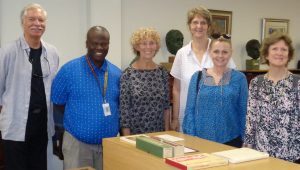
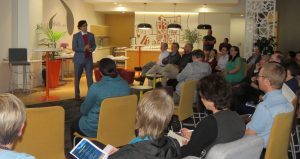
 The 7th annual Library Research Week was launched with Prof Johan Fourie, Associate Professor at LEAP (the Laboratory for the Economics of Africa’s Past) as the guest speaker. With his topic From documents to data: how digital tools can transform history research, Prof Fourie indeed showed his audience how new digital tools may turn old unremarkable documents into wonderfully rich historical sources that can reveal new narratives of the past.
According to Prof Fourie, 90% of the data in the world was generated over the last two years and paper often remains the best way to preserve information. We probably have better records of communication between people of the 1700’s than of the 1990’s.
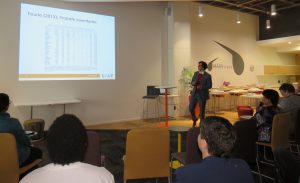 Prof Fourie and his team use historical records that may seem unimportant e.g. inventories (lists of assets when people die), death notices, marriage registers, baptism records, petitions, auctions, slave mortgage rolls, and prisoners’ rolls. They are also using the Household Surveys available in our Library’s Africana section.
By transcribing and analysing the data some interesting trends and information emerge that can assist in understanding and explaining the long-term economic development of Africa’s diverse societies. This information can give an indication of what happened at a specific time in history, although the why cannot always be explained and needs further investigation and research. For example, baptism and marriage records can reveal the number of bridal pregnancies. By using these methods it is possible to dispel deep-rooted misbeliefs and myths about our collective past.
These historical records are handwritten and difficult to read and require manual transcription. In future though, new machine learning technologies will be used to transcribe handwritten records. Records that are available in PDF or XML are easier to read and to analyse and will open new research opportunities.
Libraries and archives play a vital role in preserving these historical documents (of seemingly unimportant nature). They are repositories of information and potential knowledge that can help to uncover the untold stories and histories of the past and give a voice to those often excluded in the past.
Hanlie Strydom
Photographs: Bronwyn Bruton
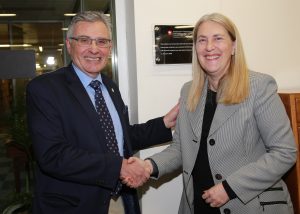 On 20 June 2019, the manuscript collection of the Institute for Democratic Alternatives in South Africa (IDASA) was handed over to Stellenbosch University (SU) by Her Excellency Mrs Helene Budliger Artieda, Ambassador of Switzerland to South Africa. The IDASA collection was acquired by SU with the financial support of the Swiss Confederation. The ceremony took place in the Special Collections division of the SU Library.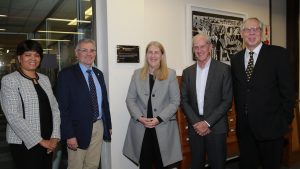
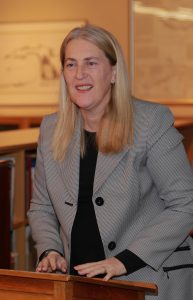 “This has been an amazing journey. Switzerland is proud to be associated with this archive and these manuscripts. We have been working on this since late 2015. I’m happy that there will be a lasting memory at Stellenbosch University and that this collection is where it needs to be,” said Artieda during the handover.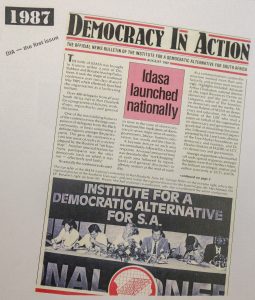
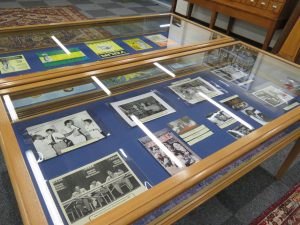
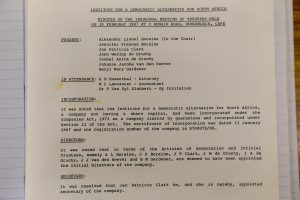
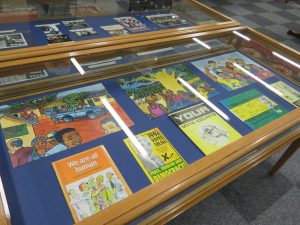
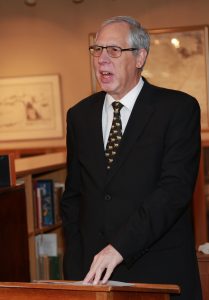 Also in attendance at the handover ceremony was Mr Paul Graham, former executive director of IDASA, who gave an overview of the history and significant role the organisation played in shaping South Africa’s democracy. He stated that IDASA was always committed to building capacity for democracy amongst citizens and their governments and is a model that is still worth following today.
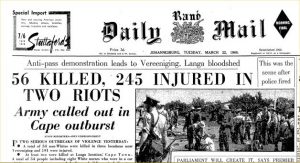 The Library recently acquired online access to the Rand Daily Mail (RDM), a critically important newspaper that pioneered popular journalism in South Africa and was published daily in Johannesburg between 1902 and 1985. From its beginnings in 1902, the RDM was known for its controversial yet courageous journalism. Despite significant pressure from the conservative government, its writers openly addressed issues that white readers knew little about. This fully searchable online resource contains every article, advertisement, editorial, cartoon and photograph and offers a wealth of unique perspectives on 20th-century South Africa. It is expected to add considerable value to historical research on campus.