On April 1, 2026, a group of 22 learners and mentors from the Smart Kids Academy at Mfuleni joined Iimbovane for a river observation day with the aim of exposing the young learners to freshwater ecosystems and the rich diversity found in them.
The day began with a safety session where the learners had to identify hazards associated with working along a river. They had to identify hazards that can result from natural causes and human behavior as well as how they can be prevented. After the safety session, the learners had a few minutes to mingle with Nosipho Gqaleni, Media and Communication Intern at the SU School for Climate Studies and who holds a Master’s degree in Botany, as she gave a short overview of her academic journey.
Next, it was time to get wet as the learners divided into groups and set up monitoring stations along the riverbank. In their working groups, they sampled areas shaded by trees and areas exposed to direct sunlight to see how these conditions influenced species composition. There were squeals and laughter, as the learners encountered crabs, but they also worked meticulously to collect the invertebrates using nets and catching trays, thermometers to detect water temperature, and the float method to measure the rate of the river flow.
The day’s activities led to discussions about climate change as the learners thought of how rising temperatures and reduced flow rates could change habitats and threaten invertebrate communities.
Following the field sampling, the learners visited one of the undergraduate laboratories, where they used microscopes and scientific identification keys to classify and name the invertebrates. For most learners, it was their first experience using a microscope, marking an exciting introduction to practical ecological science.
Miss Xhala, Director and Founder of the Smart Kids Academy commented:
“I was very grateful to have heard about Iimbovane, the day had such an engaged set of activities and I will definitely be bringing in more learners to the programme.”
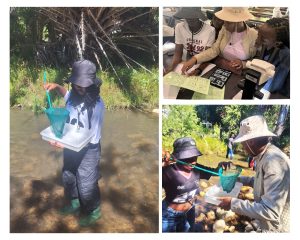
Learners investigating macro-invertebrates at the Eerste River, Stellenbosch