The Library recently subscribed to two Digital Science tools, namely Dimensions and Altmetric Explorer. In this blog post we would like to highlight the functionalities of Altmetric Explorer, a tool with which you can track and analyse the online attention and societal impact of your publications. It is a per-article metric and captures real-time, non-traditional digital engagement, also known as “altmetrics” and it shows if a work is influencing public policy, making headlines in the news, or being discussed on social media.
The number of citations to an article have been the single measure for the success of research for a long time. While citation counts and the h-index remain valuable indicators of scholarly output, they do have two limitations, namely time-lag and a narrow audience.
The time-lag
After a researcher publishes a work, it can take two to five years for other scholars to read the paper, do their own experiments, write their articles, and finally publish a new paper that formally cites the original work.
The audience
Traditional metrics are created within a narrow academic audience. They tell you how many other scholars are citing your work, but they do not take into account everyone else who might have read your work or have discussed it in online platforms.
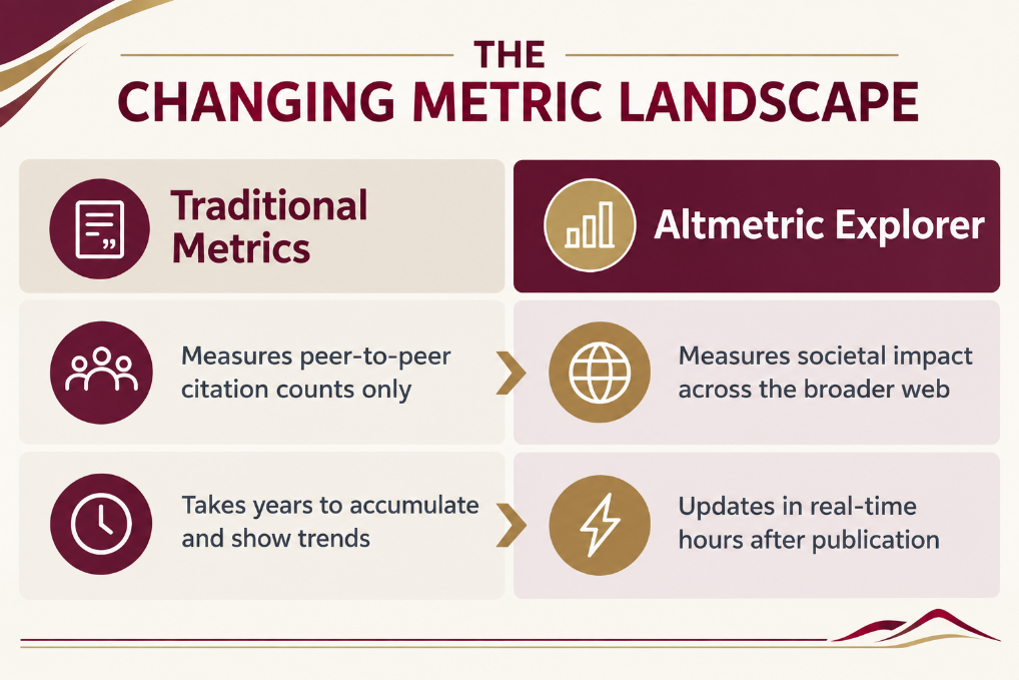
Image created with ChatGPT
Altmetric Explorer solves three main issues related to the evaluation of research output:
- The time lag is eliminated, because online attention is tracked in real-time which allows researchers to track early engagement with their work.
- Altmetric also tracks mentions in global policy documents, patents, and clinical guidelines.
- It has a way to quantify public engagement, by mapping broader conversations in news items, blogs, wikipedia and social media.
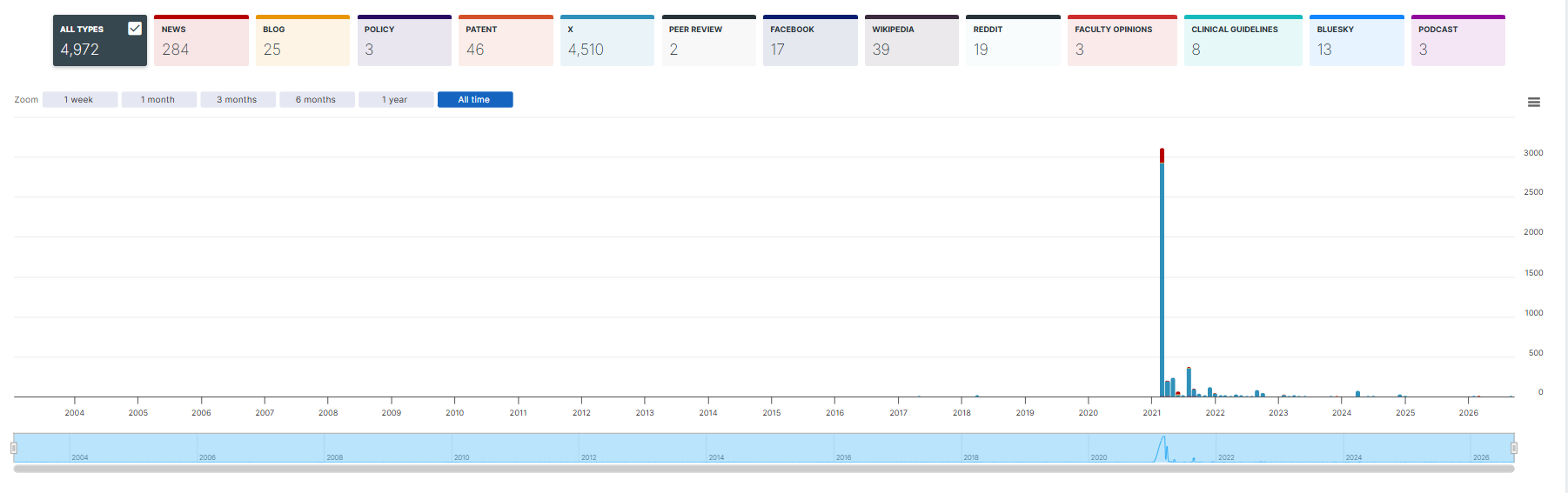
The image below is a screenshot of a researcher’s timeline page on Altmetric Explorer. Here you can see that the researcher published work with a large attention score around 2021-2022. You can also see exactly how many mentions came from the array of different tools (social media, news outlets, blogs, etc) and click through to see the actual posts. There are many more pages per researcher profile to explore the data compiled by Altmetric and you are able to download the data.
Coming Wednesday, Digital Science will present a training session on both Dimensions and Altmetric Explorer. Please register here if you would like to learn more about these two tools.
Read more:
https://www.altmetric.com/blog/
https://www.altmetric.com/case-studies/
https://www.altmetric.com/whitepapers/
https://www.altmetric.com/about-us/our-data/our-sources/
Enquiries: Marié Roux