Author: Marié Roux (Page 3 of 19)

Library launches a smarter, more client-centred website

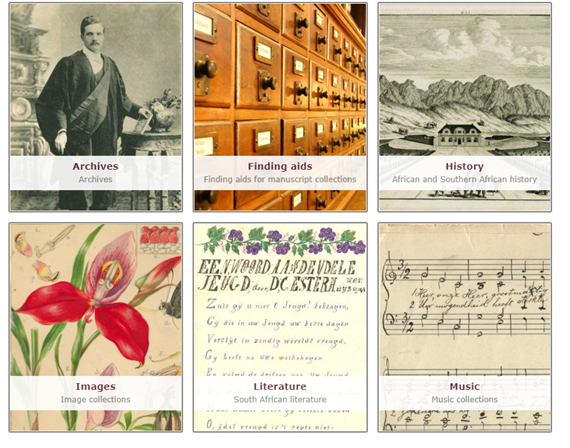
Surveys and other research conducted by the Library highlighted the need for a more client-focused and smarter website to better support research. As a client-centred environment, the Library took this feedback seriously. In response, on 19 December 2025, the Library and Information Service proudly launched its newly implemented website, now live at https://www.su.ac.za/library.

This launch forms part of Stellenbosch University’s broader initiative to migrate all SharePoint website content to the institutional Drupal web content management system. By leveraging SU-specific templates and Drupal components, the library has been able to streamline content, present information more compactly, and deliver a fresh, modern, and user-friendly online experience.

The library supports researchers at every stage of research, and these resources are designed to guide you through every phase of your academic journey. From starting a project with information resources and consultations with librarians, to managing data and references, publishing your research and measuring its impact, the library provides expert tools and guidance, all accessible from this page. You will also find opportunities to grow through workshops, events, and training. With these services the library is your partner in discovery, research and innovation. From the Library homepage, simply select Research to explore all available research services and resources.

Some of the research services highlighted include:

  • Carnegie Research Commons: A dedicated space offering support and services to strengthen postgraduate and academic research.
  • Open access publishing support: Including the Read & Publish agreements with multiple publishers make open access publishing more affordable and increase visibility for SU researchers.
  • Research impact tools: Access specialised resources to assess scholarly performance and measure research impact.
  • Research data management: Consultations, training, interactive tools, and the secure SUNScholarData repository help researchers manage, preserve and share data effectively.
  • Special Collections: Rare and valuable materials preserved for future generations, supporting current research needs.

For more information and other services, visit the Library website or consult your faculty librarian.

The Library welcomes feedback on the new website. Share your thoughts at https://web.lib.sun.ac.za/feedback.

Author: Natasja Malherbe

Step inside the future: SU Library opens Immersive Technology Lab

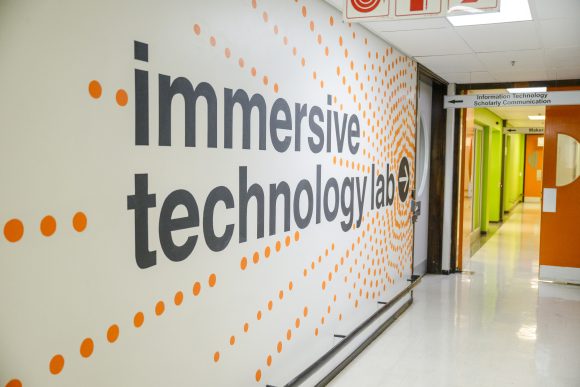
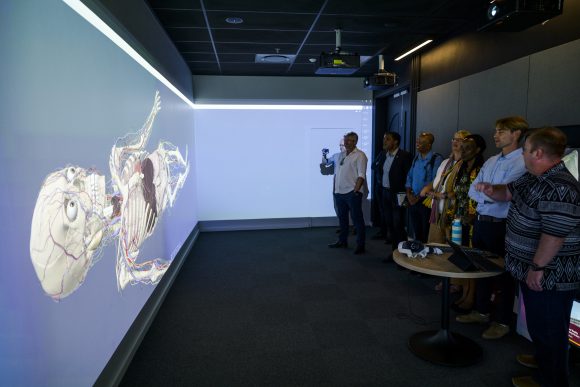
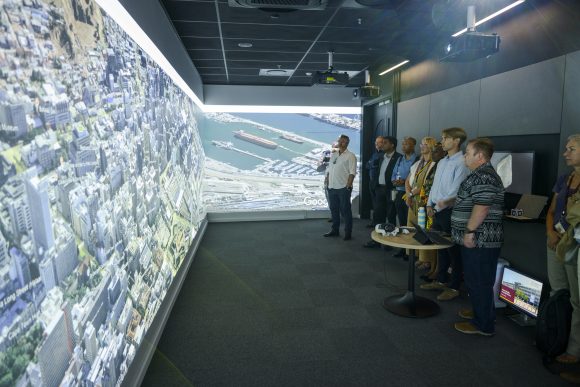
On Tuesday, 27 January 2026, the Library officially opened its new Immersive Technology Lab. It is a virtual and augmented reality visualisation space that provides an in-room panoramic visualisation across a 270° display area.  The Immersive Technology Lab was designed as a “true immersive” projection-based experience.

The opening marked the culmination of a seven-year journey. Ellen Tise, Senior Director: Library and Information Service, reflected: “What started as a much simpler vision has evolved alongside the rapid development of technology. This is a space where staff and students don’t just look at data – they can step inside it.” Originally conceived as a modest visualisation space, the Immersive Technology Lab has grown into a fully immersive environment supporting teaching, research, innovation, training, and industry collaboration.

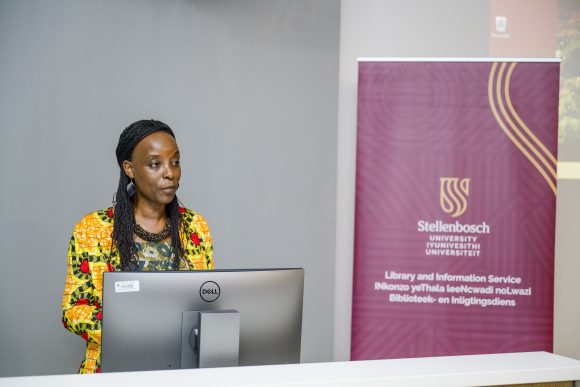
Prof Deresh Ramjugernath, Ms Ellen Tise and Prof Sibusiso Moyo during the opening talks of the event.

Professor Sibusiso Moyo, Deputy Vice-Chancellor: Research, Innovation and Internationalisation, highlighted the Lab’s strategic importance: “Across disciplines, we are working with much larger datasets and more complex information. We need to interpret, explore and communicate our findings clearly and responsibly.” Located in the Library, the facility encourages interdisciplinary collaboration and strengthens SU’s core functions of teaching, learning, and research, as well as innovation.

Professor Deresh Ramjugernath, Rector and Vice-Chancellor, described the Immersive Technology Lab as a world-class facility that equips students and staff with new skills and ways of thinking, preparing them to meet the demands of a rapidly evolving academic and digital landscape.

Implemented as an extension to the existing Makerspace, the Lab adds enhanced visualisation services to the library’s existing data visualisation support service offering. It expands on the Makerspace’s existing suite of 3D content creation and editing services. In doing so, the Immersive Technology Lab integrates existing data visualisation literacy training services, virtual reality (VR) head mount display experience services and new research data visualsation services into one consolidated immersive visualisation environment. This uniquely positions the Lab as an interdisciplinary research support service at SU, accessible to students and faculty members across the whole spectrum of academic disciplines.

In practice, this means that staff and students using the Immersive Technology Lab will experience being visually immersed in a project – applying technologies such as virtual and augmented reality to create deeply engaging, simulated experiences for education, research, training, and industry. Examples of practical use could be nursing students practicing hospital procedures; engineers, being ‘in’ virtual 3D models of construction sites; and creating climate science models, such as translating invisible greenhouse gas data into visible, understandable experiences.


Accordingly, the Immersive Technology Lab was implemented as a direct consequence of the data-intensive environment in which Higher Education institutions with a strong research focus have to operate.

To visit the Immersive Technology Lab, please contact your faculty librarian to assist with an appointment or contact the Head: Makerspace, Norman Hebler, directly at nhebler@sun.ac.za.

Beyond Transformative Agreements: A new direction for Open Access in South Africa

South Africa has made significant strides toward Open Access (OA) in scholarly publishing, yet critical challenges remain. While Transformative or Read-and-Publish Agreements (TAs) have helped shift traditional subscription models toward open access, evidence increasingly shows that these agreements have not fully delivered on their promise of equity, sustainability, and transparency.

Limitations of Transformative Agreements

Experiences from countries like Sweden and the United Kingdom reveal that despite increased OA content, paywalled research continues to grow, and costs have risen. In many cases, only well-resourced institutions can afford to participate, leaving much of the research community behind. Moreover, publisher opacity around pricing and limited competition have reinforced rather than dismantled inequitable systems.

Sweden’s recent policy shift provides useful guidance. The country has moved away from hybrid TAs and is instead focusing on agreements with fully OA publishers, developing a national OA platform, supporting researcher-owned journals, and addressing copyright barriers. Similarly, the UK’s JISC review highlights that eight years after the first TAs, full and immediate OA remains elusive.

Myths and Realities of TAs

A review of Transitional Agreements in the UK – JISC  March 2024, lists and debunks several common myths:

  1. Equity – False; OA publishing remains unaffordable for many.
  2. Transition to OA – Only wealthy institutions can fully participate.
  3. Moving away from APCs – Caps and hybrid costs make TAs even more expensive.
  4. Transparency – Publishers often refuse to reveal costs.
  5. Competitive pricing – Market remains uncompetitive and opaque.
  6. Better library positioning – Libraries remain intermediaries without real negotiating power.

For South Africa, the lesson is clear: it is time to move beyond Transformative Agreements to more impactful and sustainable models of OA. The Universities South Africa Research and Innovation Strategy Project proposes a forward-looking solution — a national Diamond Open Access publishing platform that removes author and reader fees, promotes equitable participation across institutions, raises the visibility of South African research, and fosters collaboration by removing access barriers. Coalition S defines Diamond Open Access as “a scholarly publication model in which journals and platforms do not charge fees to either authors or readers. These journals are community-driven, academic-led, and academic-owned publishing initiatives… They are equitable by nature and design.” Through its SUNJournals platform, the Library is able to provide Diamond Open Access publishing services to faculties and departments.

It is critical that we ensure that true open access enhances broader and deeper research impacts to serve the public good, not commercial interests. South Africa has a great opportunity to lead the way in building a more inclusive, transparent, and sustainable open scholarly ecosystem. However, this will require bolder decisions by the government and other stakeholders that will move us beyond the extortionate and unsustainable TA models.

For information on how to join the Diamond Open Access movement by publishing Stellenbosch University journals on the SUNJournals platform, please contact Mrs Mimi Seyffert-Wirth.

References

A review of Transitional Agreements in the UK – JISC  March 2024. https://zenodo.org/records/10787392/files/A_review_of_transitional_agreements_in_the_UK.pdf?download=1

Widmark, W. (2024). How can we get beyond the Transformative Agreements: a Swedish perspective. Revista Española De Documentación Científica, 47(4), e402.

Author: Ellen Tise


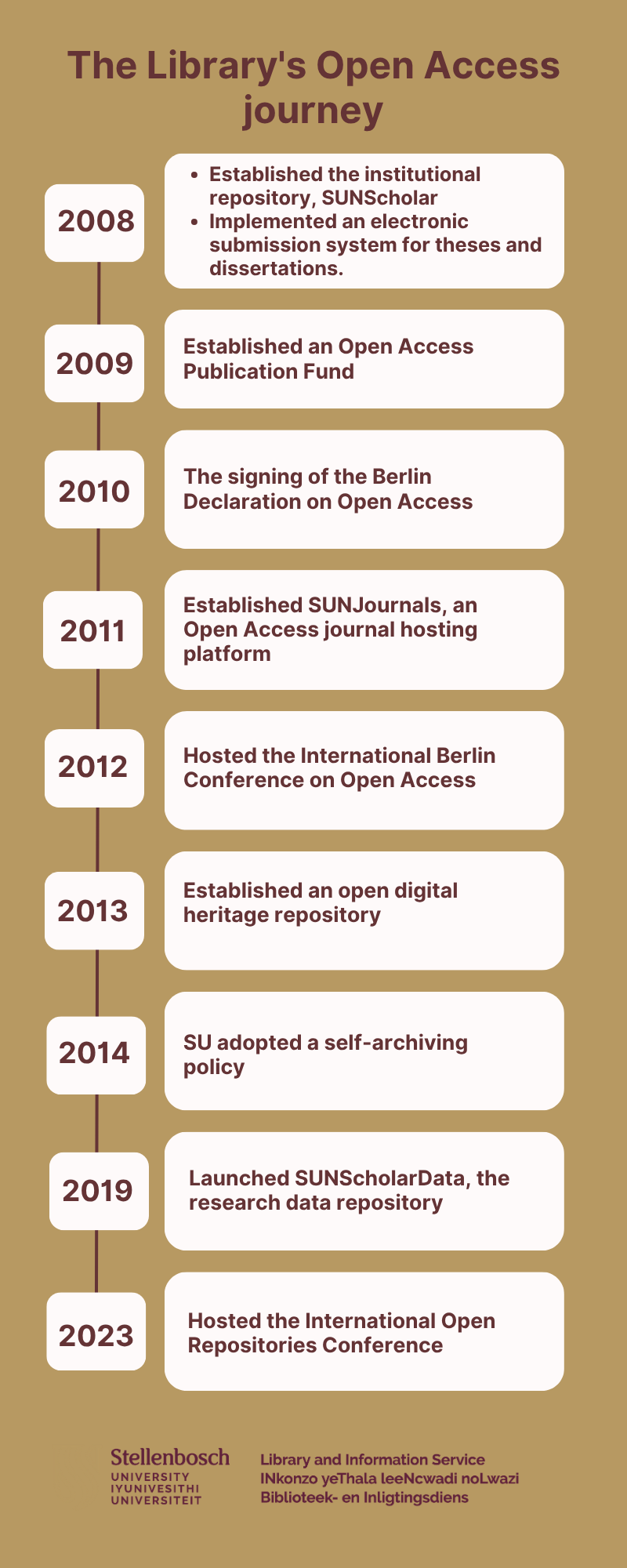
The Library’s Open Access journey

As a transformative approach to scholarly communication, Open Access (OA) seeks to remove barriers to accessing, sharing and reusing research outputs.

Scholars such as Raffaela Kunz and Monika Plozza believe that this approach not only contributes to the sharing of research but could potentially advance universal access to information, as envisioned by the United Nations Human Rights framework and the Sustainable Development Goals (SDGs).

It can also play a transformative social justice role by closing the digital gaps and dismantling information disparities between those who have the resources and means to purchase and access information and those who do not, according to Paul Ginsparg, founder of the open-access archive arXiv. University of Cape Town academics Laura Czerniewicz and Sarah Goodier highlight the need for OA as both an economic and democratic one.

Worldwide, universities and academic libraries are involved in OA advocacy, encouraging researchers to publish their work in OA platforms.

These institutions believe that OA enhances the reach and impact of scholarship.

The commitment of Stellenbosch University (SU) to OA was cemented 15 years ago with the signing of the Berlin Declaration on Open Access by the former rector and vice-chancellor, Professor Russel Botman, on 20 October 2010. In doing so, Botman became the first VC of an African university to sign the declaration, positioning SU as a pioneer on the continent in taking the OA pledge.

This landmark commitment marked the acceleration of OA, giving the university library strategic impetus and legitimacy in its advancement, support and advocacy of OA and other open-science initiatives.

The signing of the declaration itself was symbolic as it was signed during International Open Access Week. In an opinion piece for the Mail and Guardian on 29 October 2010, aptly titled ‘Stellenbosch takes open access lead’, the Senior Director of the SU Library and Information Services, referred to the signing of the OA pledge as “an important step towards sustainable human development” and towards the realisation of equitable information access.

Fifteen years later, we reflect on the progress, challenges, and future under the theme of the International Access Week 2025: “Who Owns Our Knowledge?”‘

Open Access has been embraced by the Library and the University and has become a vehicle for increasing the impact of research at this institution and allowed the library to go on this journey.

The Library’s OA journey began in 2008 with the establishment of the institutional repository, SUNScholar, and the implementation of an electronic submission system for theses and dissertations. SUNScholar boasts over 35 000 full text research outputs with more being added annually.

The Library’s commitment to Open Access was furthermore manifested in the establishment of an Open Access Publication Fund in 2009, which funded 1035 SU research publications until its closure in 2021.

The hosting of an Open Access Seminar in 2010 was also a highlight where Stellenbosch University became the first African University to sign the Berlin Declaration of Open Access to Knowledge in the Sciences and Humanities.

In 2011 the Library established SUNJournals, an open access journal hosting platform for journals with an SU affiliation. We currently host 23 journals in various disciplines.

In 2012 we hosted the International Berlin Conference on Open Access. This was the first time that the Berlin Open Access Conference was held in Africa. It explored the transformative impact that open, online access to research has on scholarship, scientific discovery, and the translation of results to the benefit of the public.

In 2013 the library established an open digital heritage repository to showcase and allow access to the library’s special and unique collections and currently provides access to over 18 000 unique records in 50 collections. We can see examples of these materials being accessed and used in a range of outputs.

In 2014 the University adopted a self-archiving policy that asks SU authors to submit a copy of their accepted manuscript to the institutional repository.

In 2019, with research data widely recognised as crucial to the research process and the preservation of and access to such data becoming an absolute necessity, the library launched SUNScholarData.

This research data repository enables Stellenbosch University researchers to share and disseminate their research data in accordance with good research data management practices and will serve to facilitate the findability, accessibility and reusability of the university’s research data.

In 2023 the Library hosted the International Open Repositories Conference, the first time this event was held on African soil.

Our Open Access journey continues with ongoing negotiations regarding transformational agreements and our commitment to Open Access will remain steadfast and help us to take on whatever new OA developments may come our way.

Authors: Ellen Tise, Mimi Seyffert-Wirth, Siviwe Bangani

This article is based on notes prepared for Miss Ellen Tise’s speech during the International Open Access Week celebrations and the 15-year commemoration of the signing of the Berlin Declaration on Open Access at Stellenbosch University on 22 October 2025. Some of the text was extracted from an article Open access and research outputs: Who owns our knowledge? which was published in University World News, Africa Edition.

SU recognises research visibility and impact through Open Access Awards

The establishment of institutional repositories such as SUNScholar, SUNScholarData, SUNDigital Collections, and SUNJournals stands as a direct testament to the University’s ongoing investment in supporting and expanding OA. The Library continues to promote OA through initiatives such as staff and student training, Open Access workshops, and participation in International Open Access Week.

In recognition of the role of OA in enhancing research visibility, impact, and societal benefit, the Library and Information Service initiated the introduction of the Open Access Awards at the University’s Research and Innovation Excellence Awards held on 22 October 2025. This initiative acknowledges that OA contributions often remain under-recognised, despite their importance.

2025 Open Access Award Categories and Winners

Category 1: Most Prolific OA Author (Scopus-indexed)

Awarded to the SU-affiliated researcher with the highest number of OA publications indexed in Scopus over the period 2022–2024. This was awarded to Professor Soraya Seedat, Department of Psychiatry. In her own words: I think I’m particularly encouraged by the Open Access Award, because it is really important. We ensure that all the work we produce is widely accessible, particularly to people living in a lower-income context, where they do not have ready access to scientific and medical literature. (View video of highlights of the event here)

Category 2: Highest Cited OA Output (Scopus-indexed)

Awarded for the OA publication by an SU-affiliated author, indexed in Scopus and published between 2022–2024, that received the highest number of citations. This was awarded to  Dr Houriiyah Tegally, Centre for Epidemic Response and Innovation.

Category 3: Most Downloaded OA Output (SUNScholar & SUNScholarData)

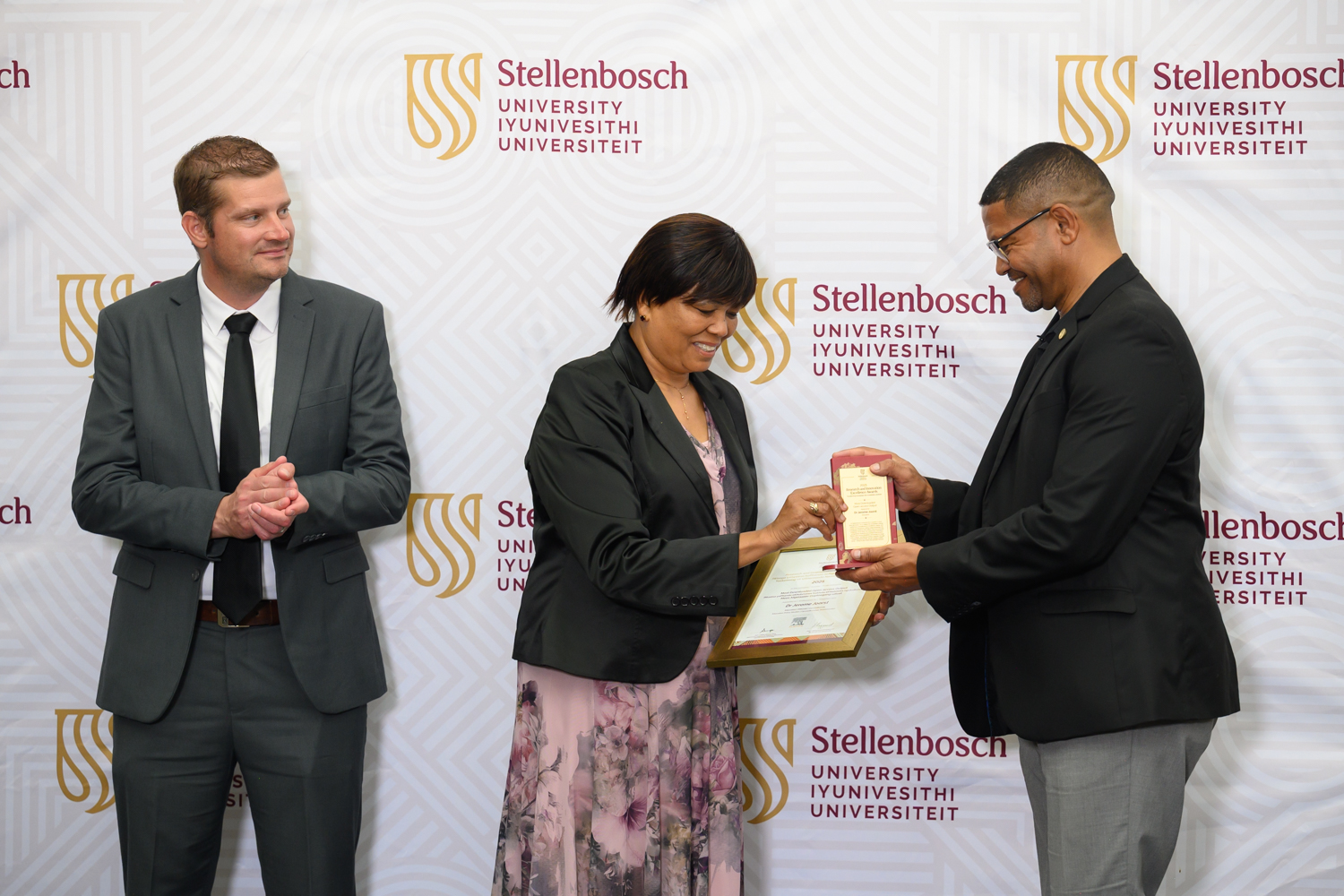
Awarded to the SU-affiliated author(s) whose OA output deposited in SUNScholar from 2020-2024 received the highest number of downloads. This was awarded to:  Drs Jerome Joorst, Education Policy Studies, Technology Transfer/Innovation team, and  Willie Smit, Mechanical and Mechatronic Engineering.

Prizes were sponsored by Elsevier, while the Office of the DVC: Research, Innovation and Postgraduate Studies provided the plaques. Through the introduction of these awards, the Library aims not only to recognise and celebrate researchers who actively choose Open Access, but also to encourage broader participation in OA publishing across the University.

Strengthening the University’s leadership in advancing equitable access to research is both a social justice imperative and a contribution toward sustainable human solutions. Increased Open Access publishing enhances the visibility and impact of SU research and aligns directly with the University’s aspiration to be Africa’s top university, which is ranked within the Top 100 globally.

From left to right: John Sterley (Research Account Manager, Elsevier), Ellen Tise (Senior Director: Library and Information Services and Dr Jerome Joorst (Education Policy Studies)

Author: Dr Siviwe Bangani

International Open Access Week: Who owns our knowledge?

International Open Access Week is a flagship global event dedicated to open access, held annually in October.  This year’s theme was Who Owns Our Knowledge? and it took place 20 – 26 October 2025. The Library aimed to use this year’s Open Access Week event to also commemorate the signing of the Berlin Declaration on Open Access by the then Rector of Stellenbosch University, Professor Russel Botman, on 20 October 2010.

On 22 October 2025, a virtual seminar was held, involving various stakeholders. The programme included a presentation by the Library: “15 Years Unlocked: Celebrating Open Access since signing the Berlin Declaration,” by Ms Ellen Tise, the Senior Director of the Library.  She shared a candid account of the Library’s open access journey since the commitment to open access was made. She also highlighted the milestones and pitfalls encountered along the way.  This was followed by a lively panel discussion involving three experts, Emilie Algenio (Mason University Libraries), Dr Charles Akwe Masango  (University of Cape Town) and Denise Nicholson (Scholarly Horizons). While expressing frustration with the slow pace of assenting to the new South African Copyright Bill, the speakers empowered researchers and librarians on copyright, creative commons and fair use, and how these can be used by producers of knowledge to retain rights to their works. Ina Smith’s presentation “Policy and Research Ownership in the Age of Open Access” emphasised the need for clear institutional and national OA policies that prioritise researcher rights. She further encouraged universities to deposit research outputs in trusted institutional repositories for visibility and long-term preservation, as well as for compliance with funder requirements.

Screenshot of some attendees, by Theresa Schoeman

Author: Dr Siviwe Bangani

The University’s data repository, SUNScholarData, is a proud member of the World Data System

The Stellenbosch University Library and Information Service is proud to announce its membership in the World Data System (WDS), a global network that promotes trusted data services and open science. WDS membership supports the long-term preservation, accessibility, and interoperability of research data worldwide. This membership confirms SU’s commitment to the FAIR principles (Findable, Accessible, Interoperable, Reusable) and positions SUNScholarData as part of an international effort to advance data sharing and collaboration.

Joining WDS brings significant benefits for SUNScholarData and Stellenbosch University. It heightens the repository’s profile, giving worldwide visibility through the International Science Council, international funders, and the global data community. Membership also demonstrates our commitment to open science, promoting SUNScholarData as a trustworthy scientific data service aligned with WDS Data Sharing Principles. Finally, it enhances our repository’s performance and agility by improving data discovery and supporting international data exchange, thus ensuring our researchers’ work is more accessible, impactful, and globally connected.

SUNScholarData is also among a select group of CoreTrustSeal-certified data repositories in South Africa. These recognitions assure SU researchers that the data sets they deposit are curated and preserved according to internationally recognised standards of quality and trustworthiness.

Author: Kirchner van Deventer

Springer Nature “Free” Open Access allocation reached national annual cap

The Library and Information Service has long supported Open Access (OA) publishing, including the development of strong institutional repositories enabling both green and diamond OA. More recently, as part of the South African National Library and Information Consortium (SANLiC), the Library entered several “Read and Publish” (Transformative) Agreements. These agreements have allowed SU researchers to publish OA in selected journals without paying Article Processing Charges (APCs).

However, some agreements have a national annual cap on the number of OA articles that can be published. Once this cap is reached, APC waivers are no longer available for the remainder of that year.

As such, we wish to inform SU researchers that the 2025 national allocation for OA publishing in Springer Nature hybrid journals has now been fully used. Of the 1,074 articles allocated for South African institutions, SU researchers contributed 96 articles (approximately 9% of the national total).

As a result, Springer Nature has deactivated the no-fee OA publishing option for SU authors in hybrid journals with immediate effect. Any new OA submissions to Springer Nature hybrid journals will now incur APCs, which will be invoiced to authors or their departments, as they are no longer covered by the agreement. Researchers may still publish in Springer Nature hybrid journals without paying APCs if they choose the standard (paywalled) publication route.

Despite the latest developments, the 15% discount for BioMed Central (BMC) fully OA journals remains in place. Researchers will continue to be responsible for the full APCs when publishing in other fully OA Springer Nature journals.

We understand that this change may affect research publication planning. We encourage researchers to consider other OA options available through SANLiC’s remaining “Read and Publish” agreements, which still provide no-fee OA publishing in hybrid journals from several other publishers.

For more information, please consult the Library’s Open Access Publishing LibGuide.

For further assistance, please contact Sizwe Ngcobo.


SUNScholarData: Advancing Institutional Impact through Open Research

SUNScholarData is a relatively new repository for Stellenbosch University’s research data having been born in 2019. Since its inception, the research data repository has shown plenty of promise in its contribution to the global visibility and impact of SU’s research datasets. Its success so far reflects SU’s commitment to open science, global visibility, societal impact and responsible research data management. Per international standards, the repository adheres to the FAIR principles (Findable, Accessible, Interoperable and Reusable).

The FAIR principles are essential for ensuring that research data repositories serve their purpose effectively. They help make data easy to locate, open to use, compatible across systems, and ready for future research. In practice, FAIR encourages clear metadata, consistent formatting, and thoughtful documentation, which supports transparency, reproducibility, and long-term value. For institutions, applying these principles is a strategic move: it strengthens data quality, supports responsible research assessment, and ensures that repository outputs are not just stored, but usable.

SUNScholarData is also the first African institutional research data repository that received the CoreTrustSeal certification. This certification signals that a research data repository meets internationally recognised standards for trustworthiness, transparency, and long-term stewardship. It validates that the repository has robust governance, clear data access policies, and sustainable infrastructure, all of which are critical for institutional credibility and responsible data management. For researchers and stakeholders, it offers assurance that deposited data will remain accessible, usable, and protected over time. In practice, CoreTrustSeal strengthens alignment with FAIR principles and supports strategic integration into global research ecosystems.

Below we provide an overview of some of the key statistics about the platform.

Repository Growth and Engagement

Total Deposits: 551 datasets have been archived, representing a broad spectrum of research outputs.

Contributor Base: 141 individual depositors have engaged with the platform, signalling widespread institutional participation.

Usage Metrics: Over 150,000 views and 30,000 downloads demonstrate sustained interest and practical reuse of hosted datasets.

Citation Count: 16 citations suggest growing scholarly recognition, with potential for increased uptake through enhanced discoverability.

Figure 1: SUNScholarData statistics 2019-2025

Disciplinary Reach

Disciplinary contributions span multiple faculties. This diversity reflects cross-disciplinary engagement, though further metadata refinement could improve attribution and reporting accuracy.

Figure 2: Datasets uploads per Faculty

Global Visibility

SUNScholarData has achieved notable international reach, with the United States accounting for over 120 000 views. Other top-viewing countries include South Africa, Germany, the UK, France, and Ireland – underscoring the repository’s relevance beyond national borders.

Figure 3: Global visibility of SUNScholarData

High-performing datasets:

Below are some of the datasets that appear to have had the highest impact in terms of views and downloads. In the table below, related articles published from the data were linked.

Figure 4: High-performing datasets


Dataset Publications linked to the data Views Downloads
Dwelling Informal Settlement Experiment 20 Dwelling Large-Scale Experiment of Fire Spread in Informal Settlements 2161 2774
N mineralisation data used to predict the response to fertilisation in semi-mature pine stands Modelling soil nitrogen mineralisation in semi-mature pine stands of South Africa to identify nutritional limitations and to predict potential responses to fertilisation 3366 538
Flexural properties of Pinus patula planted at different initial spacing The flexural lumber properties of Pinus patula Schiede ex Schltdl. & Cham. improve with decreasing initial tree spacing 2399 988
Supplementary information (videos) illustrating the reaction of a ewe to the odour of her own lamb versus that of another lamb Olfactory cue mediated neonatal recognition in sheep, Ovis aries 1701 2580
Oceanic_Al_Menzel A First Global Oceanic Compilation of Observational Dissolved Aluminum Data With Regional Statistical Data Treatment 2515 501
Erica species anthocyanin biosynthesis gene expression data Floral Color, Anthocyanin Synthesis Gene Expression and Control in Cape Erica Species 2717 568
Petrochemical blending problem instances On the solution of petrochemical blending problems with classical metaheuristics 2160 1031
Synthetic domestic hot water profile generator A probabilistic hot water usage model and simulator for use in residential energy management 1837 1102
Celtis africana metabolite profiles: Supplementary Materials Antibacterial activity and gas chromatography mass spectrometry (GC–MS)-based metabolite profiles of Celtis africana and its endophytic extracts 1659 843

The datasets listed above reflect notable engagement, with several attracting considerable attention through both views and downloads. For instance, the Dwelling Informal Settlement Experiment – linked to research on fire spread in informal settlements – received over 2,100 views and nearly 2,800 downloads, highlighting its relevance to urban safety and planning. Datasets tied to real-world issues like urban safety, environmental modelling, and agriculture are drawing thousands of views and downloads, which suggests they’re reaching the right audiences. This level of engagement suggests the repository is successfully enhancing both visibility and reuse of research outputs.

SUNScholarData provides Stellenbosch University with a certified, standards-aligned repository that supports responsible data stewardship and institutional credibility. By adhering to the FAIR principles, it ensures that research data is structured for long-term access, reuse, and interoperability, which are critical for reproducibility and strategic assessment. Its CoreTrustSeal certification affirms that governance, access policies, and infrastructure meet global benchmarks, positioning the university’s data outputs within trusted research ecosystems. SUNScholarData is consequently a durable asset for transparent, auditable, and future-ready scholarship that remains an important part of Stellenbosch University’s open research infrastructure. Its increasing use, varied content, and integration with institutional systems reflect steady progress in supporting data sharing and stewardship within the African research context.

Author: Kirchner van Deventer
Graphics: Marié Roux

Lessons in Open Research and Research Data Management: Reflections from the Figshare South Africa User Group Conference 2025

In partnership with Stellenbosch University Library and Information Service, Digital Science held its first Figshare South Africa User Group Conference at STIAS from 31 July to 1 August 2025. Figshare is the platform used for Stellenbosch University’s institutional research data repository, SUNScholarData. It forms part of the products that Digital Science makes available, alongside other important platforms such as  Symplectic Elements, Dimensions, and Altmetric Explorer.

Attendees were research data professionals, librarians, and institutional stakeholders from across the country who came to explore the evolving landscape of open research and data management and share their experiences. The event highlighted strategic innovations, platform developments, and institutional leadership in advancing responsible data practices.

Stellenbosch University’s Deputy Vice-Chancellor: Teaching and Learning opened the conference. Together with Dr Mark Hahnel (VP Open Research at Digital Science), they set the tone for a forward-looking dialogue. They emphasised the global momentum behind Open Access, the ethical responsibilities of data publishers, and the transformative potential of AI in research. Dr Mark Hahnel, in particular, praised South African institutions for their proactive stance and reaffirmed the importance of institutional support in making open data both feasible and rewarding.

During the conference, platform updates from Figshare included a redesigned interface for research outputs, enhanced mapping tools for geospatial data, and improved usability features. These developments aim to streamline data sharing and increase accessibility for researchers and institutions alike.

Institutional case studies showcased practical applications of Figshare across diverse contexts:

  • The University of Pretoria demonstrated SDG tagging within metadata, boosting discoverability and supporting its impact rankings performance.
  • The University of the Witwatersrand previewed its Open Data Vault, integrating Figshare with Altmetric and Dimensions to support large-scale impact tracking.
  • Stellenbosch University presented SUNScholarData, its FAIR-compliant repository, with ongoing efforts to build researcher capacity and efforts to align outputs with the SDGs.

A panel discussion explored challenges in research data management, including cultural resistance, infrastructure gaps, and the role of data in performance evaluation. Collaboration, automation, and community engagement emerged as key factors for sustainable progress.

Day two focused on research assessment reform, innovative workflows, and the broader role of open science. Speakers included Ms Nosisa Dube (National Research Foundation), who delivered the keynote and advocated for inclusive, values-driven assessment models aligned with DORA and UNESCO’s Open Science Recommendation.UCT showcased its digitisation of the Bolus Herbarium via Figshare’s API, illustrating scalable workflows for digital preservation. The HSRC presented its Dataset Request System, balancing openness with compliance for sensitive national survey data. UJ highlighted Figshare’s versatility in hosting diverse outputs, from exam papers to creative works, while Stellenbosch University shared its implementation of Symplectic Elements to streamline DHET reporting and researcher profiling.

The conference concluded with a group session identifying barriers – such as fragmented policies and skills shortages – and opportunities in automation, interdisciplinary collaboration, and national coordination.

Overall, the event affirmed South Africa’s leadership in open research and data stewardship, underscoring the importance of institutional innovation, inclusive assessment, and strategic collaboration in shaping the future of scholarly communication. The case studies from the various institutions showcased the power of open science in the pursuit of excellence in research and how our own platform, SUNScholarData, may be further utilised going forward.

Author: Kirchner van Deventer 

« Older posts Newer posts »