
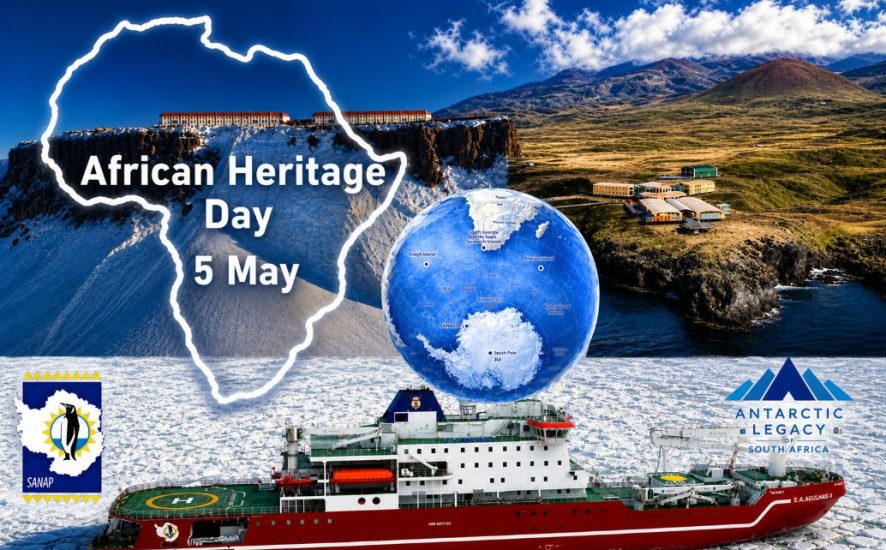
Each year on 5 May, African World Heritage Day—proclaimed in 2015 by the UNESCO General Conference—invites us to celebrate the extraordinary cultural and natural wealth of the African continent. For the Antarctic Legacy of South Africa, this day is not only about heritage rooted in Africa’s landscapes and histories, but also about the living legacy carried by the people of the South African National Antarctic Programme (SANAP). Across generations, a unique culture has emerged among the crews of South Africa’s polar vessels and the takeover and overwintering teams who journey to some of the most remote environments on Earth—SANAE IV in Antarctica, as well as Marion Island and Gough Island.
This culture is defined by resilience, collaboration, and a deep respect for both scientific discovery and human connection. Months of isolation in extreme conditions foster strong bonds and shared traditions—whether aboard research voyages or during long overwintering periods. These experiences form an intangible heritage: stories passed down, skills refined, and values instilled. They connect individuals not only to each other but also to a broader African identity that extends even into the polar regions. At the same time, SANAP’s work contributes to safeguarding the natural heritage of the Prince Edward Islands, a globally significant sub-Antarctic ecosystem rich in biodiversity and scientific importance.
Central to this legacy is the role of people. The SANAP community embodies the spirit of mentorship—experienced team members guiding early-career scientists, engineers, and support staff who will become the next custodians of this heritage. By sharing knowledge, fostering curiosity, and building leadership in challenging environments, they ensure that Africa’s presence in Antarctic and sub-Antarctic research continues to thrive. On this African World Heritage Day, we celebrate not only the places that define our natural world, but also the people who sustain its legacy—mentoring the leaders of tomorrow and carrying Africa’s heritage forward into the most distant frontiers.