
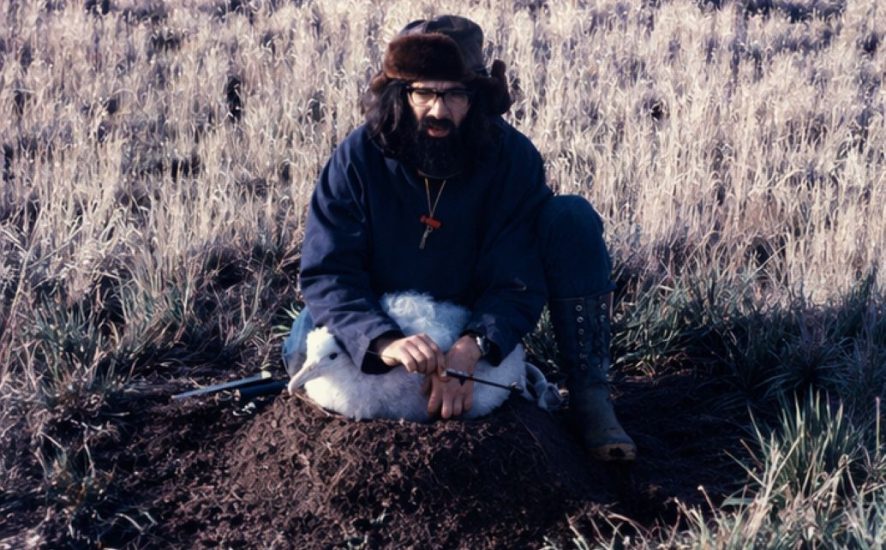
It is with great sadness that we share the passing of Tony Williams on 24 March 2026. At the same time, it is a privilege to reflect on his life and his lasting contribution to South Africa’s Antarctic and sub-Antarctic legacy. (Photo Above: Tony Williams and Wandering Albatros chick on nets. Credit: Graham Tilbury)
Tony was a member of the Marion30 overwintering team in 1974–75 on Marion Island—a formative expedition that contributed significantly to the scientific understanding of the island’s ecosystems. A trained biologist and ornithologist, Tony was closely associated with the FitzPatrick Institute of African Ornithology, where his work aligned with advancing seabird and ecosystem research.
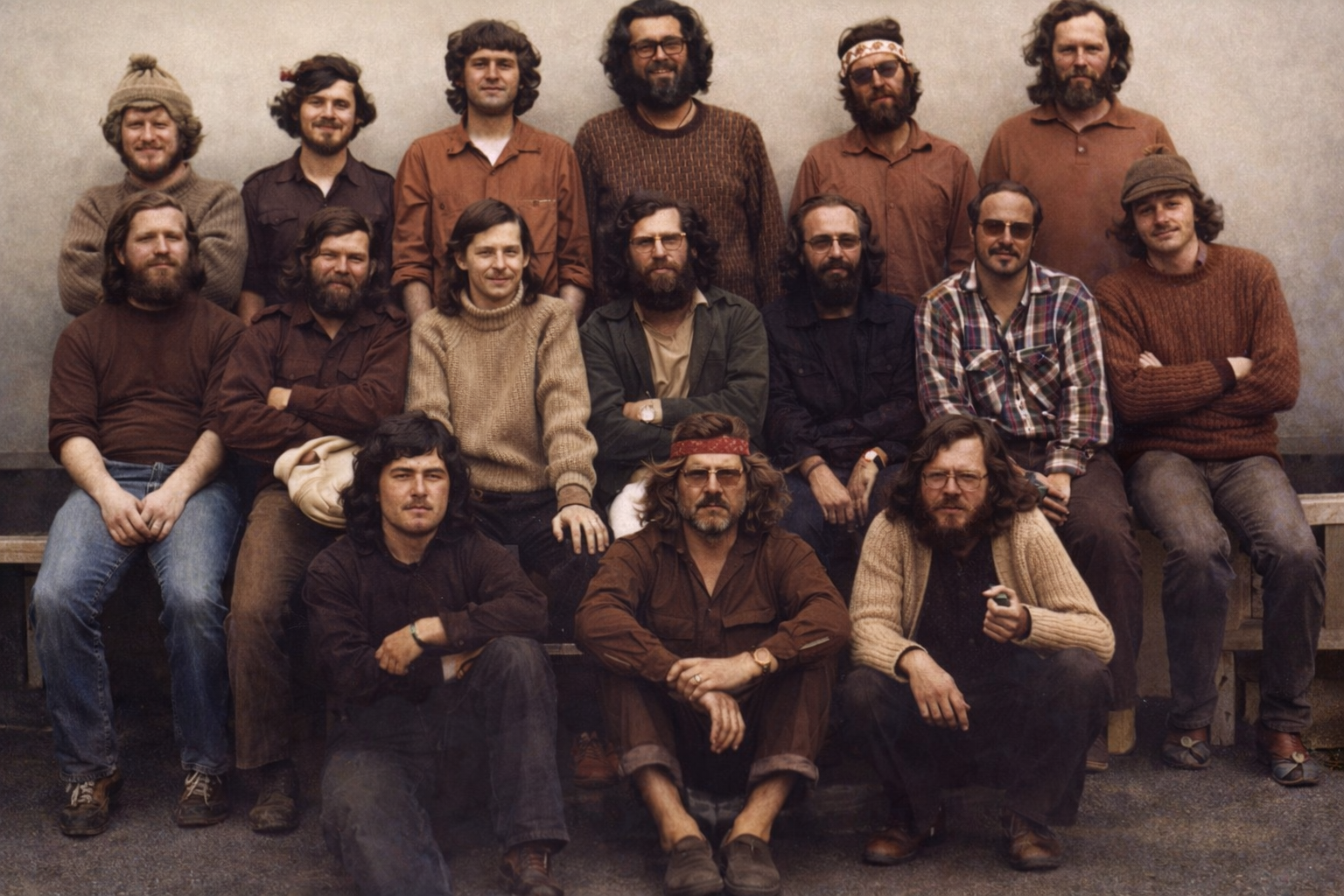 L-R -Back: Doug Anderson -Biologist, Jan Heijnen -Radio Technician, Alan Burger -Biologist, Frans van der Vegte -Meteorologist, Valdon Smith -Biologist, Ginger Smit -Radio Operator; -Middle Edgar Haberer -Medic, Pat Condy -Biologist, Howard Thompson -Ionosphericist, Albert Naudé -Leader/Meteorologist, Tony -A.J. Williams -Biologist, Ordino Kok -Biologist, Wally Wilkinson -Meteorologist; -Front Rob Anderson -Biologist, Theo Potgieter -Meteorologist, Niek Gremmen -Biologist (ALSA Archive)
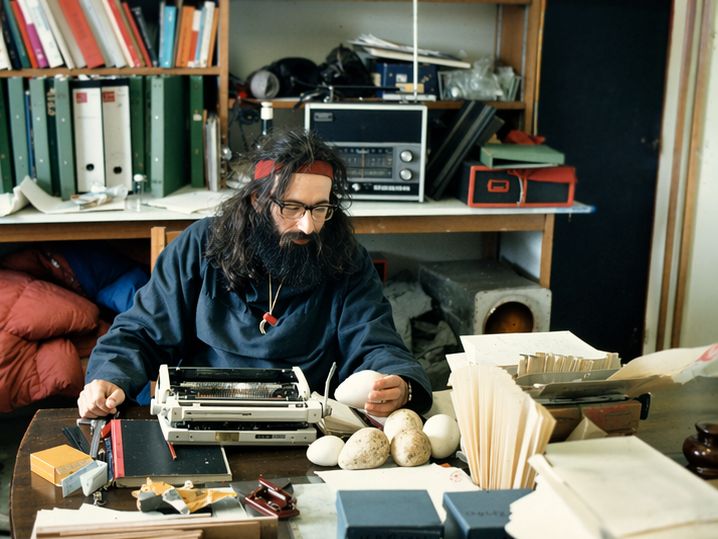 Academic and Scientific Contributions. (Left: Tony Williams in lab on Marion Island. Credit: Alan Burger) Tony’s academic work focused on seabird ecology and the functioning of sub-Antarctic ecosystems. His Master’s and doctoral research contributed to a broader understanding of bird biology and ecological processes, particularly in remote island environments. He was actively involved in foundational research efforts on Marion Island during the mid-1970s. Among the notable collaborative works from this period are:
- Ornithological research on Marion Island, 1974–75 (Williams, A.J.; Burger, A.E.; Berruti, A.; Siegfried, W.R.)
- Bird ringing on Marion Island (Berruti, A.; Burger, A.E.; Williams, A.J.; Siegfried, W.R.)
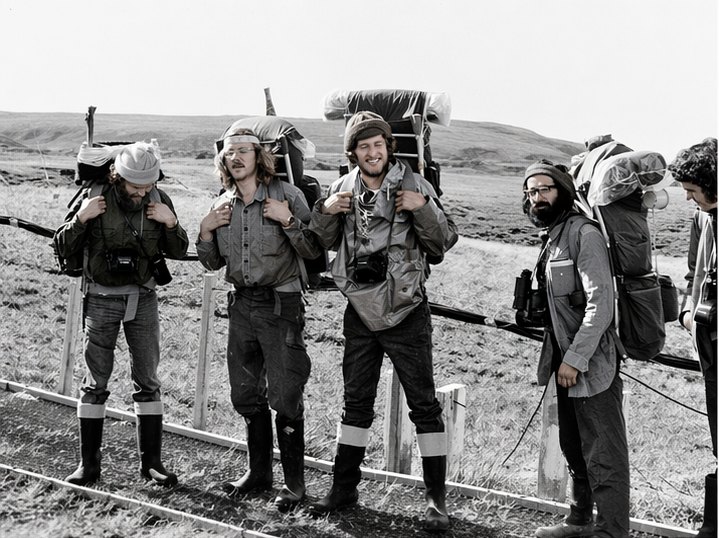 Beyond these, Tony contributed to and co-authored numerous articles and reports, many of which are preserved within the Antarctic Legacy of South Africa (ALSA) archive. These include studies on seabird diets, breeding biology, ecosystem nutrient cycling, and the ecological impacts of animals on Marion Island. His work formed part of a broader collaborative scientific network, with co-authors including: John Cooper, Alan Burger, A. Berruti, K.J. Hall, P.A.R. Hockey, M.J. Imber, P.A. Laycock, H.J. Lindeboom and W.R. Siegfried. (Right: Marion Island group hiking 1974. Credit: Alan Burger)
Tony was remembered by many within the South African Antarctic community. He maintained strong personal and professional connections with fellow researchers and expedition members over the years. Read the complete obituary by John Cooper here. (Tony Williams obituary pdf doc)
“Dr A.J. (“Tony”) Williams (1942–2026) was a distinguished marine ornithologist and conservationist whose work significantly advanced understanding of seabird ecology in southern Africa and the sub-Antarctic. Originally from Yorkshire, UK, he joined the FitzPatrick Institute of African Ornithology at the University of Cape Town in 1973, where he later completed his PhD on the breeding biology of crested penguins on Marion Island. His fieldwork, often conducted under extreme and unconventional conditions, became emblematic of his dedication and resilience. Remembered fondly by colleagues for his cheerful, enthusiastic, and generous personality, Williams leaves a lasting legacy in marine ornithology and conservation.”
Presence in the ALSA Archive: While only limited material on Tony has been available within the ALSA archive, his presence is reflected in photographic collections and expedition records. John Cooper collaborated with fellow researchers and these contributions have now been added to the archive ALSA continues to expand its archive, and additional material related to Tony’s life and work will be added as it becomes available.
Contributions in the ALSA archive. Note: The Antarctic Legacy of South Africa (ALSA) Archive is currently under construction. While we aim to provide access to linked archival material, some content may be temporarily unavailable. We appreciate your patience as we continue to expand and improve the archive.
Legacy: Tony Williams’ work contributed to a foundational period of scientific research on Marion Island and helped shape our understanding of sub-Antarctic ecosystems. His role as part of the Marion30 team places him firmly within the history of South Africa’s Antarctic programme. (Below: Tony’s Birthday. Credit Roland Thorpe)
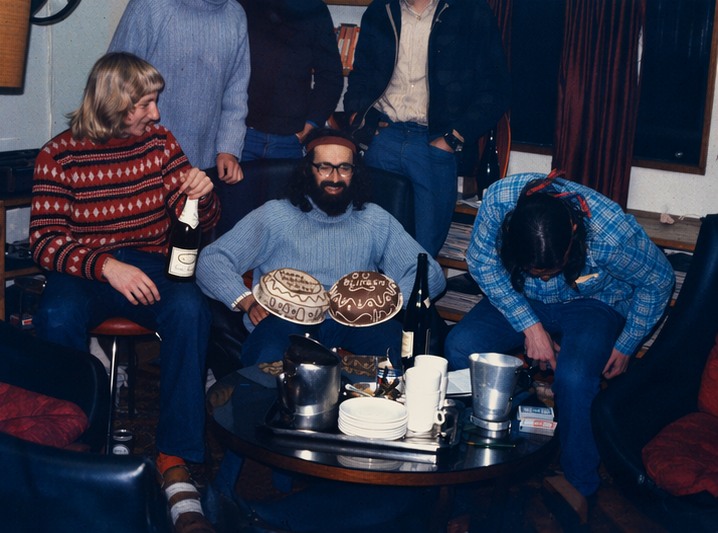 We extend our sincere condolences to his family, friends, and colleagues. His contributions remain part of the enduring legacy of South Africa’s presence and research in the Antarctic region.
Selected Publications and Research Topics
The ALSA archive includes references to a range of Tony’s work and collaborations, including:
- Animals as agents of erosion at sub-Antarctic Marion Island
- Aspects of the breeding biology of the kelp gull at Marion Island and in South Africa
- Chick-feeding rates of macaroni and rockhopper penguins at Marion Island
- Euphausiids in the diet of sub-Antarctic Eudyptes penguins
- Mineral and energy contributions of seabird carcasses, eggs, feathers, and petrels to the Marion Island ecosystem
- Ornithological observations at Gough Island (1979–1981)
- Ornithological research on Marion Island, 1974–75
These works highlight the breadth of his involvement in ecological and ornithological research during a critical era of scientific exploration.
Thanks to John Cooper for the obituary and collection all the photos.