
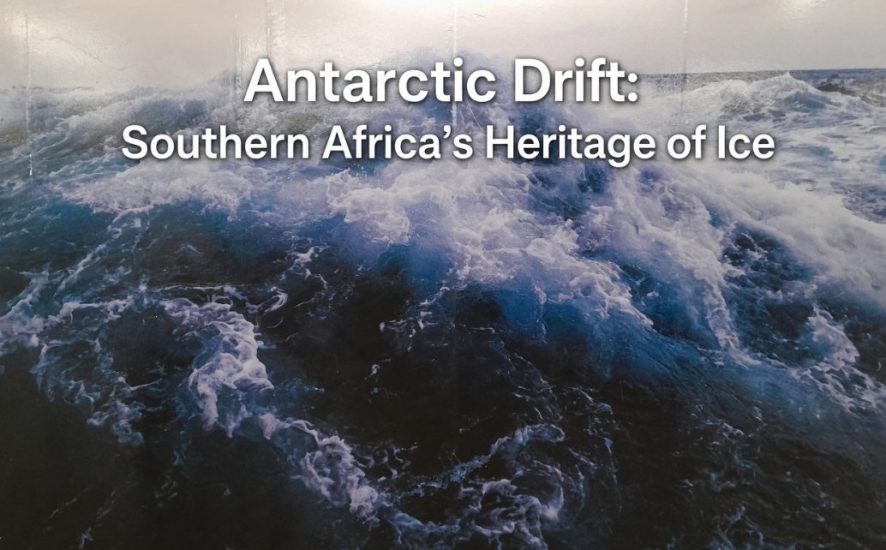
What connects Antarctica to Southern Africa? More than we might think.
On 21 August 2026, the Antarctic Legacy of South Africa (ALSA) attended the opening of Antarctic Drift: Southern Africa’s Heritage of Ice at the University of Pretoria. The exhibition asks viewers: What does Antarctica mean to us here in Southern Africa?
Antarctica can seem like a distant and isolated frozen continent, separated from the southern tip of Africa by thousands of kilometres of ocean, but it is not as disconnected from us as it might appear. South Africa has long-standing scientific and logistical connections with Antarctica and the subantarctic islands. We also experience the effects of the Antarctic region through our weather and ocean systems. As curator Sikho Siyotula-Siegemund puts it, “We may never see it, but when the cold fronts arrive, we know Antarctica is there.”
And yet, despite these longstanding connections, the Far South has remained largely absent from South African cultural discourse. Antarctic Drift seeks to bridge this gap by bringing together artistic practice and humanities research to imagine new relationships with the polar South.
About the Exhibition
Antarctic Drift: Southern Africa’s Heritage of Ice is curated by Dr Sikho Siyotula-Siegemund, managed by Dr Charne Lavery, and developed in collaboration with Prof. Jean Brundrit and Adrienne van Eeden-Wharton. The multidisciplinary exhibition forms part of the Antarctic Artists and Writers Programme (AWP) Pilot, supported by the National Research Foundation within the South African National Antarctic Programme (SANAP).
The exhibition brings together photography, drawing, installation, sound, performance, creative writing and moving image. Through these different forms, the artists and writers explore themes including climate, memory, landscape, migration, archives and environmental change.
The title, Antarctic Drift, refers to the movement of ice and ocean currents. It also captures what many viewers feel throughout the exhibition: the way ideas, memories, histories and stories drift between times and places. The works move between Antarctica and Southern Africa, past and present, personal experience and shared histories, creating connections that are not always immediately visible.
An opening of performance, poetry and conversation
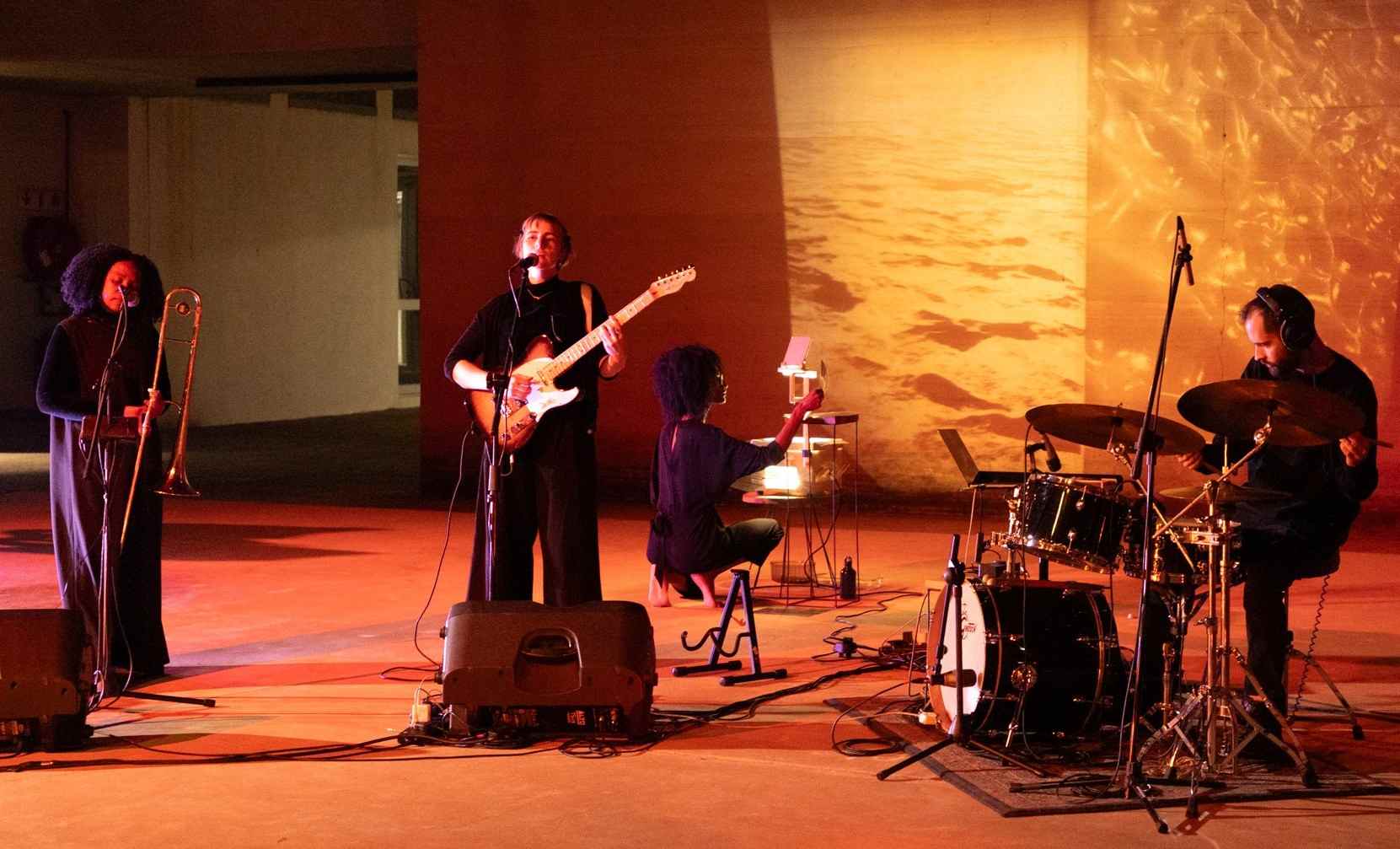
The exhibition opened with an evening of viewing the artworks, while outside, performances and poetry brought visitors together for conversation and drinks and an informal celebration of the exhibition.
The programme began with a welcome and curatorial address, followed by an introduction to the AWP Pilot and a poetry reading by Dr Mehita Iqani from her chapbook Standby. The live performances included BRINE “I Don’t Know What’s Going on with Her” by Campbell Meas, as well as Threshold, a performance by Senna-Marie with Nicholas Bjorkman on drums and Siya Makuzeni on trombone and vocals.
Together, the performances, poetry and artworks reminded viewers that Antarctic heritage is not only found in scientific records and institutional archives, but also in the stories and creative works that emerge from our relationship with the Far South.
At ALSA, we focus on preserving the people’s experiences behind the research as part of South Africa’s Antarctic heritage. Antarctic Drift reminds us that our connection to Antarctica extends beyond science into culture, memory, and imagination.
Photographs from the exhibition opening have been uploaded to the Antarctic Legacy Archive. As part of our ongoing efforts to improve access to the collection, the archive is being migrated to a new platform. During this transition, some users may experience temporary difficulties accessing images or other content. We appreciate your patience as we work to improve the archive and make its collections more accessible