
Currently invasive pines belong to naturally invasive lineages
Understanding why some introduced species are more successful at establishing and spreading than others is a substantial challenge for managing and conserving indigenous biodiversity.
Humans have been moving plants and animals around the world for many centuries. Some of these plants and animals often grow and adapt to their new environment, becoming naturalised species. Naturalised species are species that grow and reproduce in the wild outside of their original range.
Knowing which species to manage amongst all the species introduced outside of their native ranges is a huge challenge. Many factors play a role in the decision making process, one of the most important ones being whether or not the alien species causes harm to native ecosystems and species, or damages the economy.
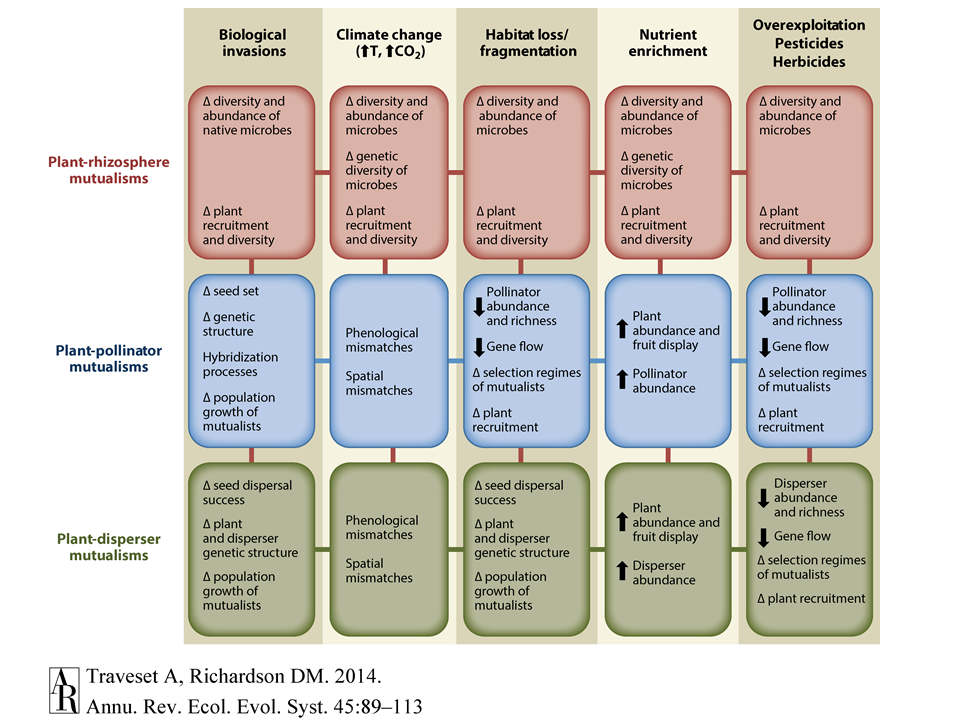
Mutualisms are relationships between organisms of different species in which each individual benefits from the activity of the other. These relationships are hugely important in nature. Essential services provided by mutualists include pollination, seed dispersal and the constitution of global cycles of carbon and other nutrients.
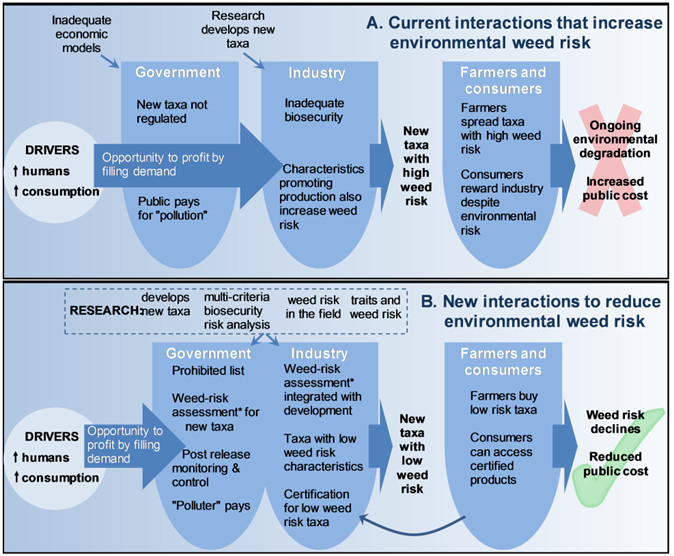
The new approach of ‘sustainable intensification’ in the livestock industry aims to increase food production from existing farmland while minimising pressure on the environment. While beneficial in many respects, this approach poses a major environmental risk, since many newly developed pasture plants pose a high risk of becoming invasive.