Read more about the article Guava invasion facilitates changes in some soil properties
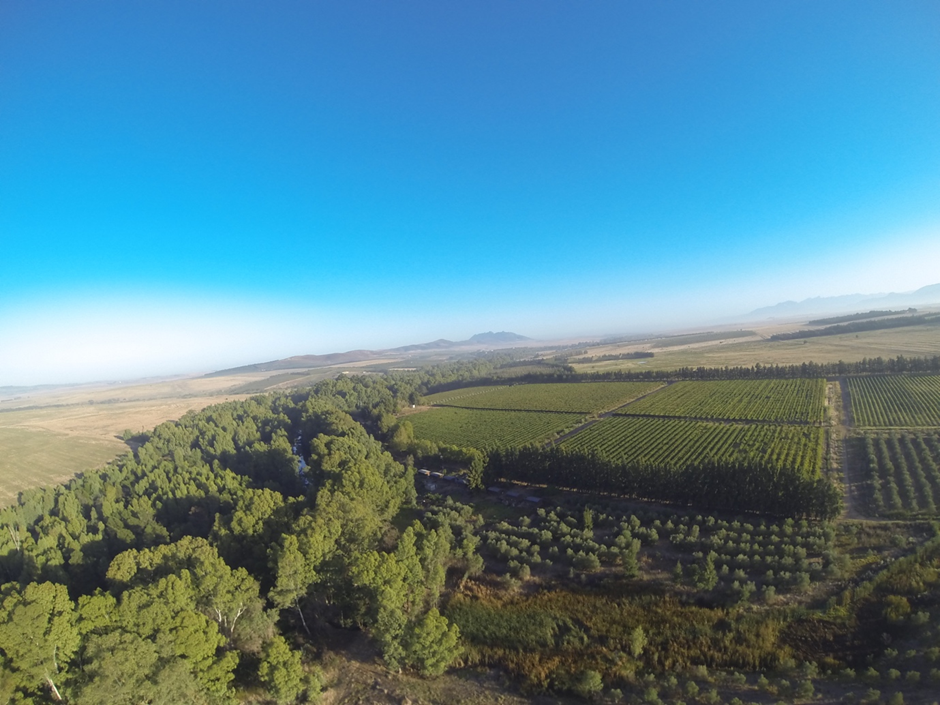
Guava (Psidium guajava L.) an invasive alien tree species that is widely distributed in South Africa, where it negatively impacts soil physico-chemical properties. (Photo credit: Sheunesu Ruwanza)

Guava invasion facilitates changes in some soil properties

Guava (Psidium guajava L.) is a commercially grown small tree, which also invades pastures and abandoned fields in South Africa. The tree acts as a pioneer species in recovering degraded landscapes thus making ecological restoration a challenge.

Comments Off on Guava invasion facilitates changes in some soil properties
Read more about the article The silent and hidden movement of latent pathogens around the world
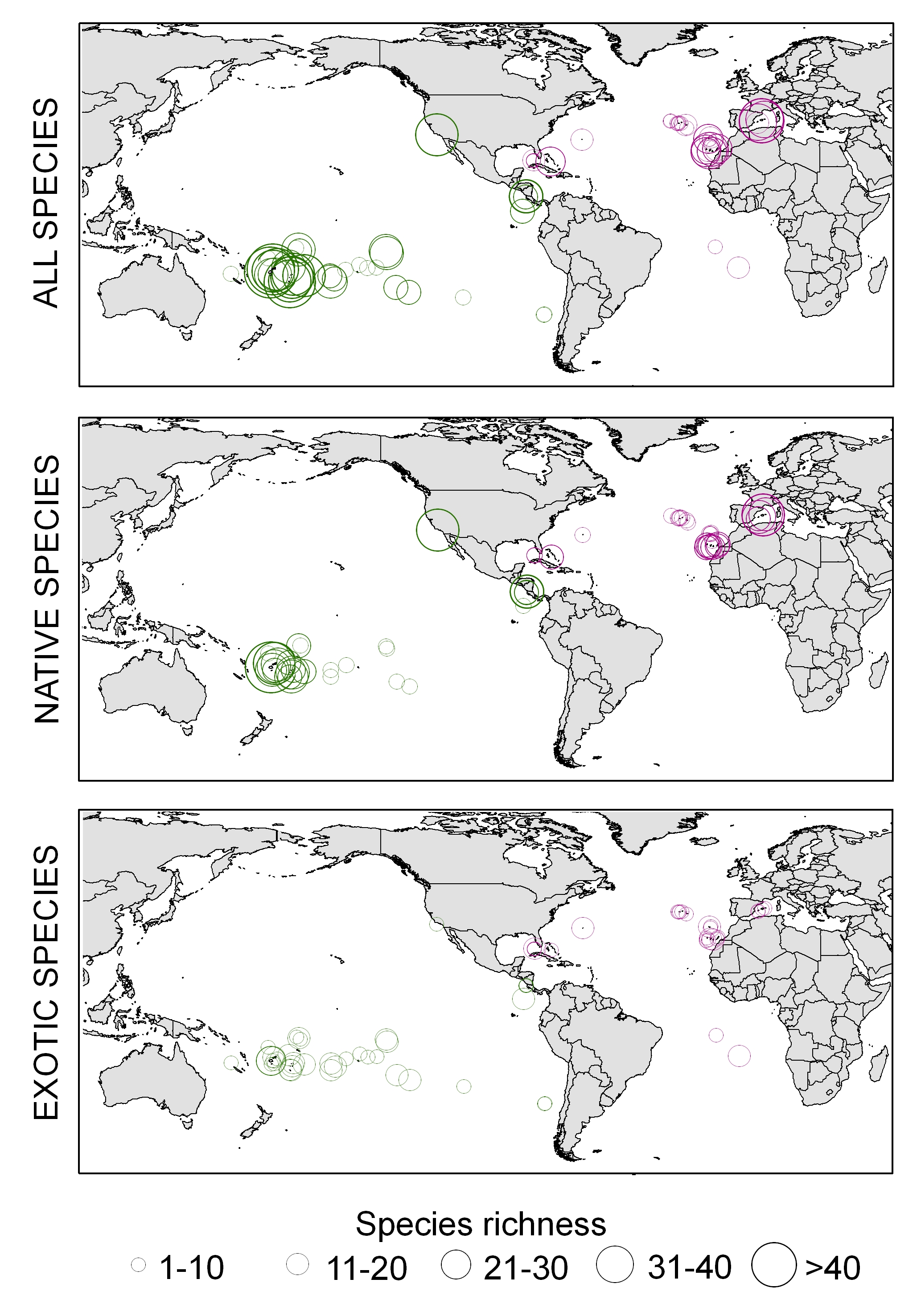
The distribution of ten Botryosphaeriaceae species of this study in Hawaii and La Réunion Islands and across the world. *These two species exist all over the world (Figure from Jami et al.).

The silent and hidden movement of latent pathogens around the world

A recent study by Fahimeh Jami, together with C·I·B researchers Jaco Le Roux and Dave Richardson, had a closer look at the geographical and host range of Botryosphaeriaceae, a family of fungi that are common pathogens on woody plants. The study, published in the journal, Fungal Biology, provided the first Botryosphaeriaceae records for both the locations and hosts studied.

Comments Off on The silent and hidden movement of latent pathogens around the world

Where did the invasive Guttural Toads come from?

Guttural toads (Sclerophrys gutturalis) have been invasive in Mauritius and Reunion for nearly 100 years (since ~1922), and have been in Constantia (near Cape Town) for another 20 years, but where did those colonising toads come from?

Comments Off on Where did the invasive Guttural Toads come from?
Read more about the article Centre for Invasion Biology represented at the IPBES assessment on invasive alien species
C·I·B affiliates at the IPBES author meeting in Tsukuba, Japan, 19-23 August 2019. (from L-R: PhD candidate Maria Loreto Castillo (C·I·B), Prof Llewellyn Foxcroft (SANParks) and Dr Sebataolo Rahlao (SANBI), Prof Sven Bacher (University of Fribourg), Dr Ryan Blanchard (CSIR) and Prof Laura Meyerson (University of Rhode Island)

Centre for Invasion Biology represented at the IPBES assessment on invasive alien species

The first meeting of authors for a new global assessment of invasive alien species and their control for the Intergovernmental Science-Policy Platform on Biodiversity and Ecosystem Services (IPBES), was held recently in Japan.

Comments Off on Centre for Invasion Biology represented at the IPBES assessment on invasive alien species
Read more about the article One thing often leads to another: the case of secondary invasion
Measuring the species richness and cover of secondary invaders in the field (Photo credit: Mashudu Mashau)

One thing often leads to another: the case of secondary invasion

Clearing the invasive alien tree Port Jackson (Acacia saligna) doesn't necessarily lead to the recovery of native plant communities because secondary invaders may be dominant and persist up to three years after clearing at levels similar to, or higher than the first year after clearing.

Comments Off on One thing often leads to another: the case of secondary invasion