Read more about the article Can public surveys be effectively used to reconstruct biological invasions?
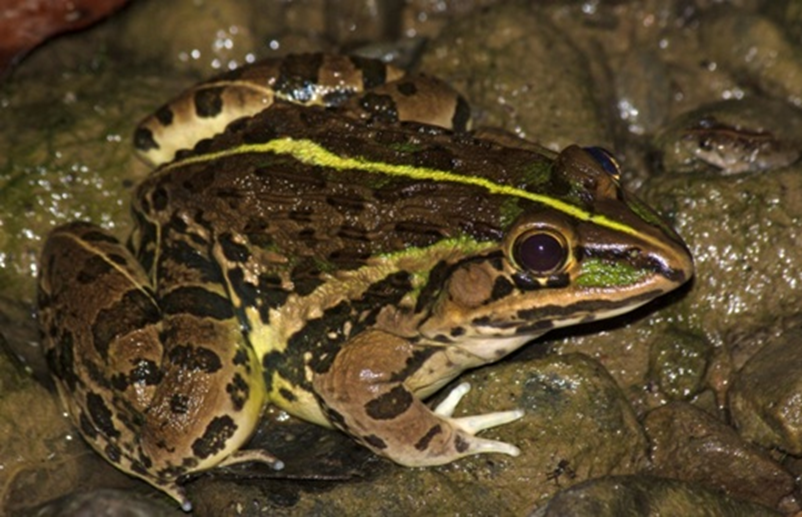
The Indian bullfrog (Hoplobatrachus tigerinus) (Photo credit: Harikrishnan S.)

Can public surveys be effectively used to reconstruct biological invasions?

Public surveys can be combined with field surveys to reconstruct invasions, finds a new study by C·I·B researchers Nitya Prakash Mohanty (PhD student) and John Measey (Core Team Member).

Comments Off on Can public surveys be effectively used to reconstruct biological invasions?
Read more about the article Plant diversity drives global patterns of insect invasions
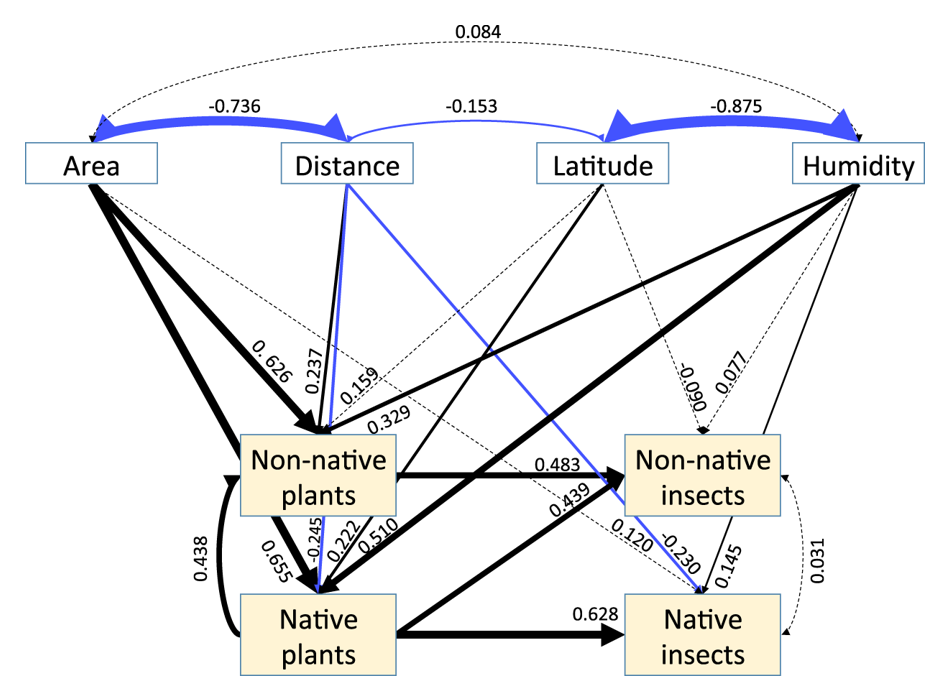
Fit of the reduced structural equation model predicting native and non-native plant and insect species richness. Regression parameter estimates are shown next to arrows; black arrows indicate positive estimates, blue arrows indicate negative estimates and weight of each arrow is proportional to the estimated value. Dashed arrows correspond to non-significant relationships. Distance represents insularity and is measured by distance to the mainland. (Figure by Liebhold et al. 2018)

Plant diversity drives global patterns of insect invasions

During the last two centuries, thousands of insect species have been moved (mostly unintentionally) outside of their native ranges. Some of these species were able to establish in new areas and in some cases with catastrophic ecological and economic impacts. Why have some world regions been invaded by more insect species than others?

Comments Off on Plant diversity drives global patterns of insect invasions

Alien pine invasions increase the severity of large wildfires

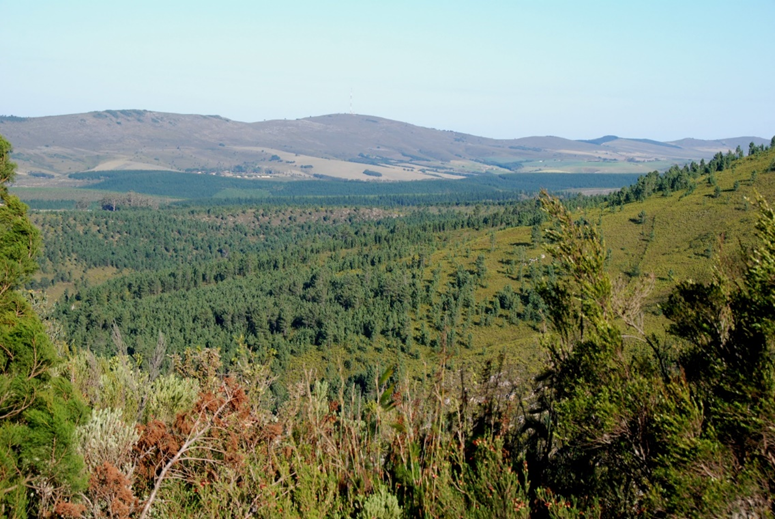
A paper published in the journal Fire Ecology has demonstrated that conversion of natural fynbos vegetation to pine plantations, and subsequent invasion of surrounding land by pine trees, increased the severity of large destructive wildfires in the Knysna region in 2017.

Comments Off on Alien pine invasions increase the severity of large wildfires
Read more about the article Unravelling the genetic structure across the native range of the globally invasive tree silver wattle
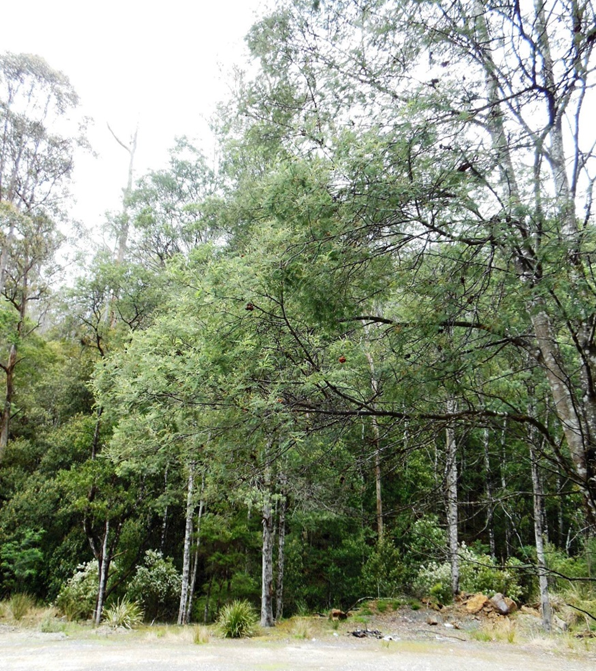
The globally invasive tree Acacia dealbata, commonly known as silver wattle, in its native range Australia. (Photo credit: Fiona Impson).

Unravelling the genetic structure across the native range of the globally invasive tree silver wattle

In a recent paper published in the journal Tree Genetics & Genomes, C·I·B post-doctoral associate, Heidi Hirsch, and co-authors investigated the genetic structure among the native populations of the Australian tree Acacia dealbata, commonly known as silver wattle.

Comments Off on Unravelling the genetic structure across the native range of the globally invasive tree silver wattle
Read more about the article Two native subtidal predators avoid invasive mussel prey
One of the native predator species in the study, a spiny starfish (Marthasterias africana) photographed at mussel beds in Muizenberg. (Photo credit: Lisa Skein)

Two native subtidal predators avoid invasive mussel prey

In a study recently published in Behavioral Ecology, a team of C·I·B researchers showed that two important subtidal predators, rock lobsters and starfish, failed to resist invasions by invasive mussel prey.

Comments Off on Two native subtidal predators avoid invasive mussel prey