Read more about the article Tackling Invasive Alien Species in Europe: the Top 20 Issues
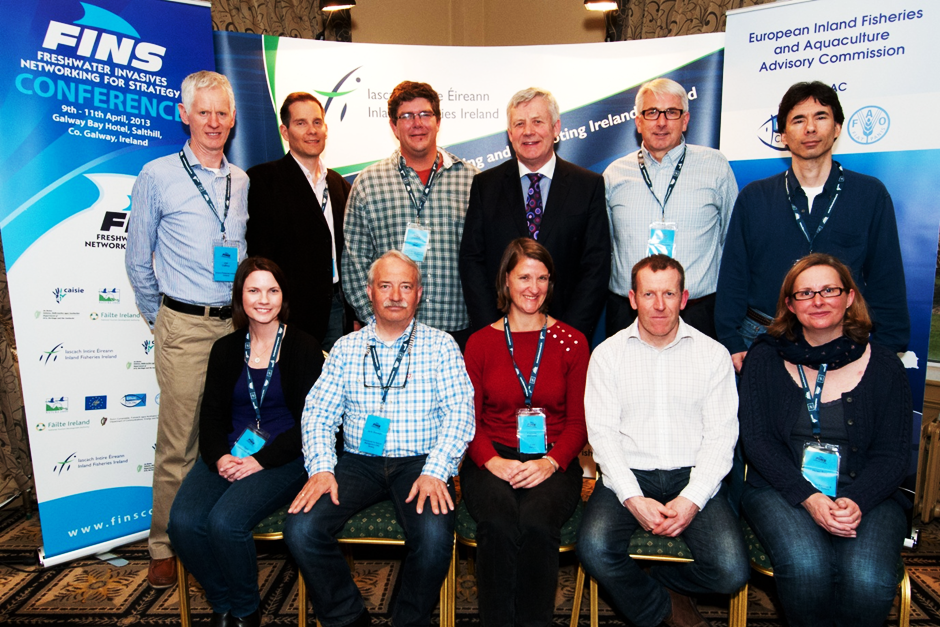
Some of the invited speakers at the Freshwater Invasives: Networking for Strategy (FINS). Back row (left to right): Joe Caffrey (Inland Fisheries Ireland), Phil Hulme (Lincoln University, New Zealand), Olaf Weyl (SAIAB/CIB), Fergus O’Dowd (Minister of Fisheries Ireland), Hugh MacIsaac (University of Windsor, Canada), Anthony Ricciardi (McGill University, Canada). Front row: Toril Loennechen Moen (Norwegian Biodiversity Information Centre), Jarle Steinkjer (Directorate for Nature Management, Norway), Frances Williams (CABI, Kenya), Niall Moore (Non-native Species Secretariat for Great Britain), Helen Roy (Biological Records Centre, UK).

Tackling Invasive Alien Species in Europe: the Top 20 Issues

Globally, Invasive Alien Species (IAS) are considered to be one of the major threats to native biodiversity. In Europe, there are about 12,000 alien species, 11% of which are invasive, causing environmental, economic and social damage. Given Global trends, it is reasonable to expect that the rate of biological invasions into Europe will increase in the coming years.

Comments Off on Tackling Invasive Alien Species in Europe: the Top 20 Issues
Read more about the article New alien species hiding in our harbours
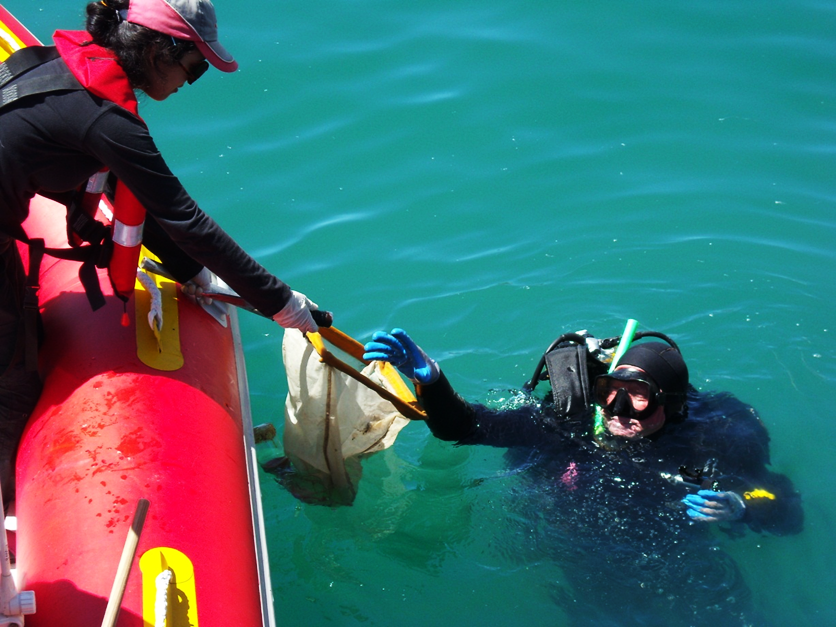
A diver surfaces to pass a sample to C·I·B researchers (Photo credit: Dr T Robinson)

New alien species hiding in our harbours

Marine alien species have not been as well studied in South Africa as their terrestrial counterparts. However, recent research by C·I·B researchers has shed some light on the occurrence of marine alien species in Western Cape harbours.

Comments Off on New alien species hiding in our harbours
Read more about the article Quantifying the impacts of alien species: developing an IUCN list
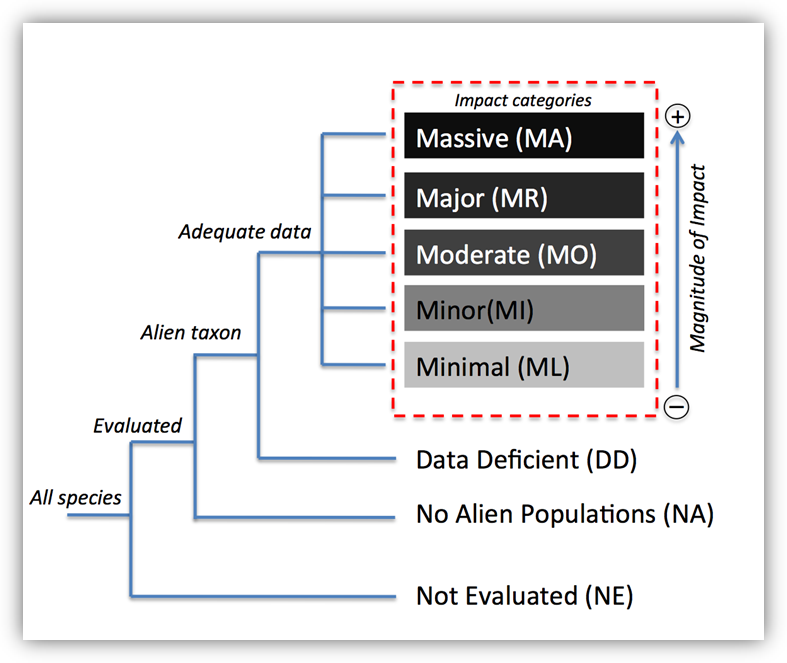
The different categories in the scheme to classify the impacts of alien species, and the relationships between them.

Quantifying the impacts of alien species: developing an IUCN list

One of the major transformations of the planet from human activities is the redistribution of species to areas outside their native range. These “alien” species have in many cases caused substantial harmful impacts to the recipient environment.

Comments Off on Quantifying the impacts of alien species: developing an IUCN list
Read more about the article Volcanic lava flow fuels tree invasion on La Réunion
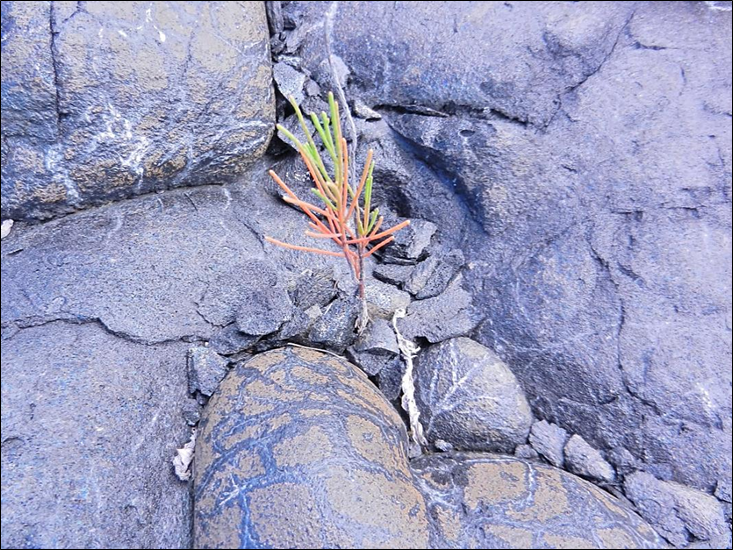
Casuarina equisetifolia seedling emerging from a new lava substrate of the Piton de la Fournaise volcano.

Volcanic lava flow fuels tree invasion on La Réunion

The volcanic island of La Réunion in the Indian Ocean is the least disrupted of the biodiversity-rich islands of the Mascarene archipelago, with around 30% of the native vegetation still intact. She-oak or ironwood (Casuarina equisetifolia), a fast-growing tree native to Australia, Melanesia, Micronesia, the Philippines, Polynesia, and Southeast Asia, was introduced to La Réunion in 1738, mainly for use as firewood.

Comments Off on Volcanic lava flow fuels tree invasion on La Réunion
Read more about the article Defining the impact of alien species
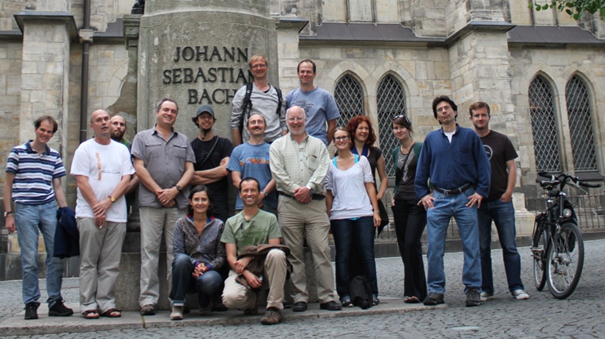
The sImpact working group in Leipzig, Germany, in July 2013

Defining the impact of alien species

All alien species cause changes to the ecosystems to which they are introduced. Such impacts are of many types - some are dramatic and obvious and can easily be classified as desirable or undesirable. However, for the vast majority of alien species, no information on impact is available. This greatly complicates the task of objectively assigning priority to management.

Comments Off on Defining the impact of alien species