Getting the measure of tree invasions

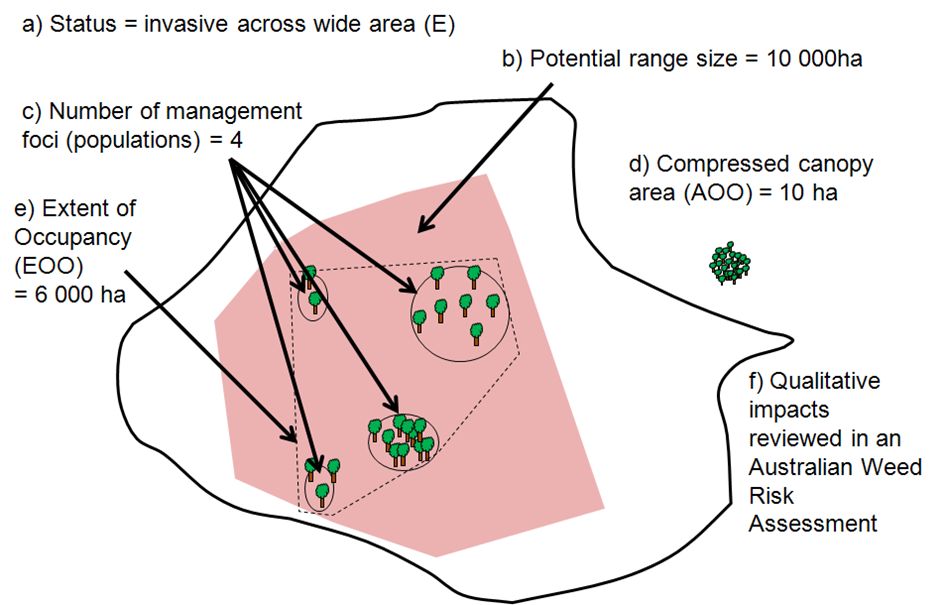
“If you can't measure it, you can't manage it” is, as with all such well-worn phrases, only partly true. But to adapt another such maxim, while we might be able to make progress without measurement, we do need proof to satisfy everyone else.

Comments Off on Getting the measure of tree invasions
Read more about the article Unlocking the potential of Google Earth as a tool in invasion science
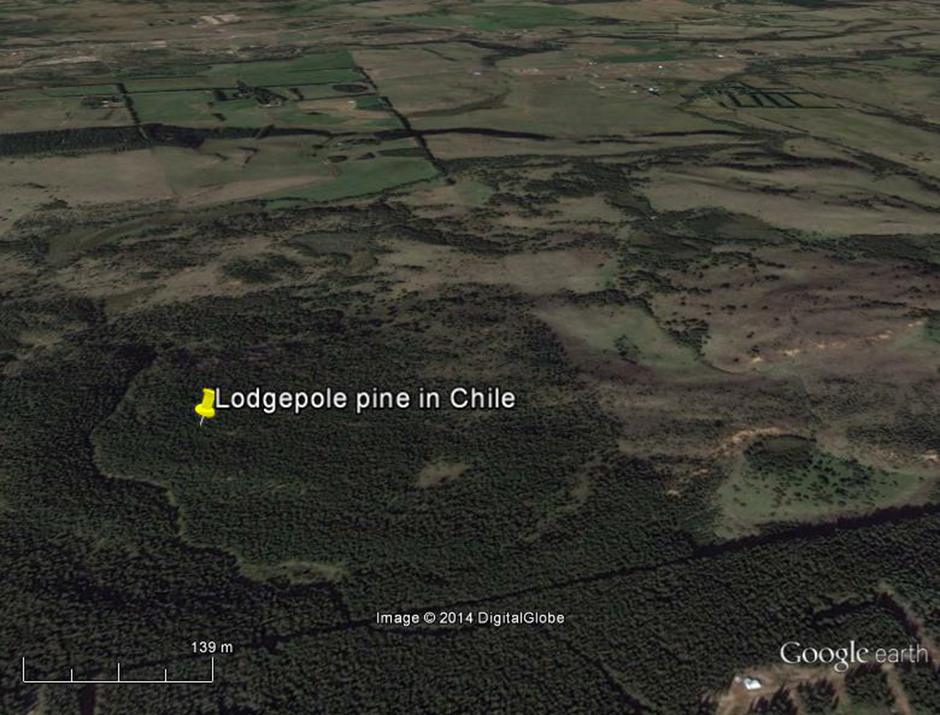
Lodgepole pine (Pinus contorta) invasion in Chile at one of the sites described in the paper. The pine plantation is to the lower right corner of the image and the invaded area is directly above the diagonal line marking the original plantation boundary, although the invasion is now so dense that the two are almost indistinguishable. Photo credit: Google Earth.

Unlocking the potential of Google Earth as a tool in invasion science

The use and popularity of Google Earth has grown tremendously since its launch, and it has a range of uses from mapping and viewing mountain bike routes to monitoring chimpanzee forest habitat. However, Google Earth had no formal recognition or guidelines for its use in the field of invasion science, despite the fact that many scientists and managers use it on a regular basis.

Comments Off on Unlocking the potential of Google Earth as a tool in invasion science
Read more about the article The need for holistic approaches in alien tree management
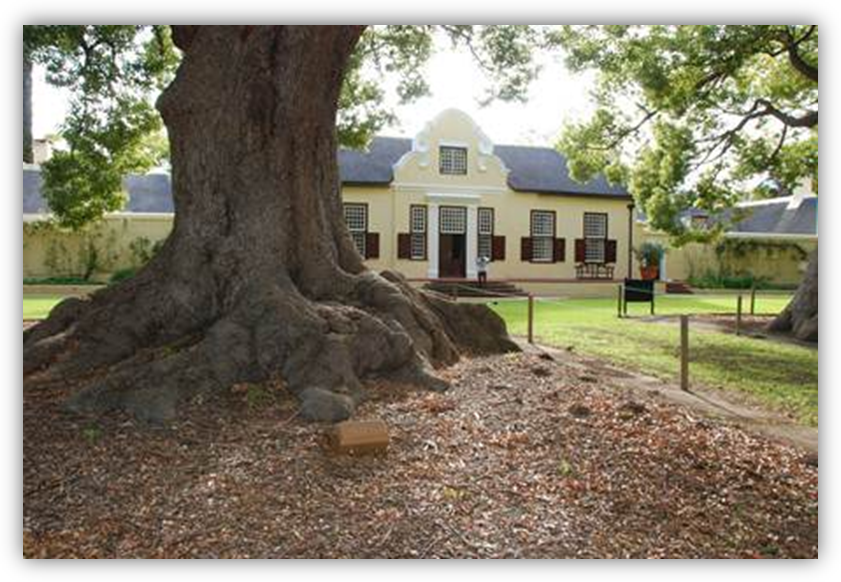
The camphor tree (Cinnamomum camphora), which in South Africa is both a declared invader and a National Monument, is a good example of a conflict species. (Photo credit Brian van Wilgen)

The need for holistic approaches in alien tree management

Alien trees offer several benefits to the people of South Africa, often as welcoming features of gardens, parks and streets, and as sources of food and timber. Despite the benefits gained from alien trees, a small number of these trees can become invasive and can cause harm to the ecosystems they invade.

Comments Off on The need for holistic approaches in alien tree management
Read more about the article Scale-area curves: a viable tool for managing invasive species
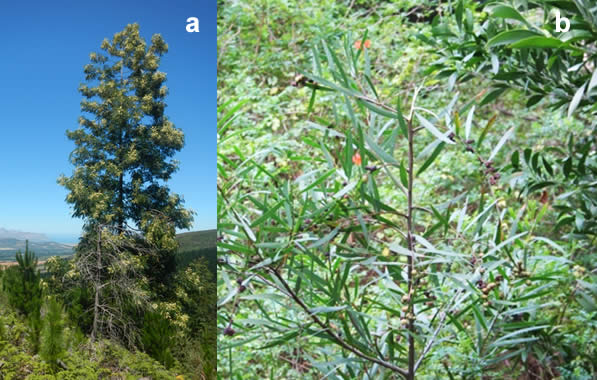
Acacia elata and Acacia longifolia were the focus species for this study. (a) Acacia elata was introduced throughout South Africa as an ornamental garden plant and has become invasive in areas close to suburban hotspots. (b) Acacia longifolia was introduced for dune stabilization along coastal mobile dune systems and has since spread from those original plantings.

Scale-area curves: a viable tool for managing invasive species

Scale-area curves have been used in conservation science as an affordable means of identifying shrinking populations that need protection. Invasions are the result of populations of invasive species that are spreading and becoming dominant in areas to which they have been introduced.

Comments Off on Scale-area curves: a viable tool for managing invasive species
Read more about the article Water canals as invasion highways for alien fish species
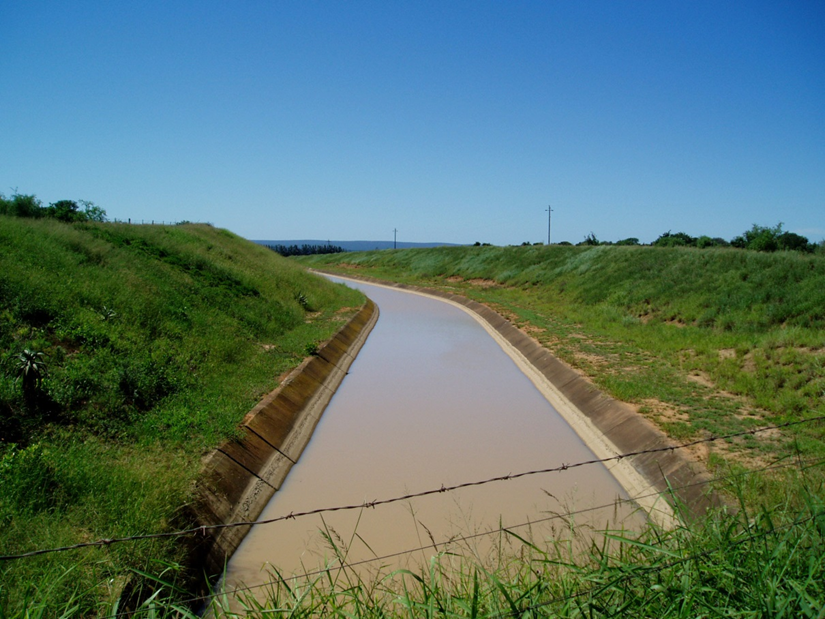
The Sundays Valley water-transfer canal, which distributes water and fishes from the Orange-Fish-Sundays Inter-Basin Water Transfer Scheme to hundreds of irrigation ponds used for citrus farming.

Water canals as invasion highways for alien fish species

Freshwater fish invasions are a major source of environmental homogenisation around the world; unique species assemblages are increasingly being overwhelmed by large numbers of introduced species. While active human-mediated introductions contribute to this process, there are also many passive pathways of fish introductions.

Comments Off on Water canals as invasion highways for alien fish species