Read more about the article Africa’s first armoured catfish invasion
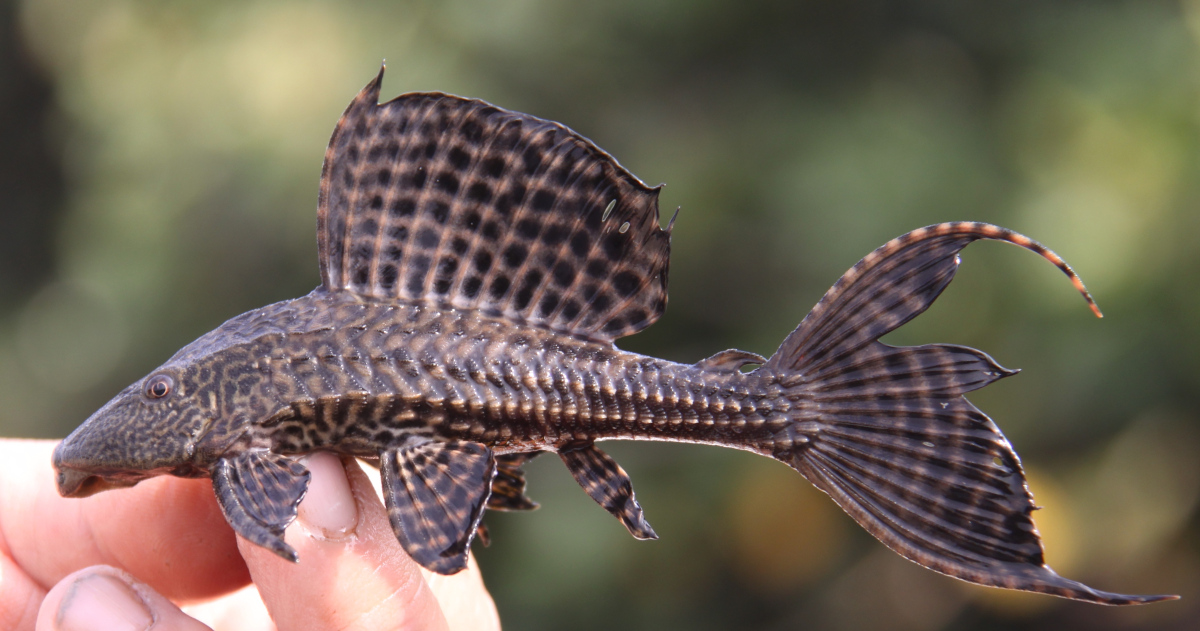
A juvenile vermiculated sailfin catfish sampled from the Nseleni River.

Africa’s first armoured catfish invasion

The South American armoured catfish family Loricariidae includes more than 700 nominal species. Some are popular aquarium fishes in the global pet trade. Releases by aquarists and escape from fish farms have resulted in several armoured catfish invasions in Central and North America, Asia and now, Africa.

Comments Off on Africa’s first armoured catfish invasion

National Geographic Society grant for legume research

Dr Jaco Le Roux, C·I·B core team member, was recently awarded a National Geographic Society’s Committee for Research and Exploration grant to investigate the consequences of legume invasions on native legume biodiversity in South Africa’s Cape Floristic Region.

Comments Off on National Geographic Society grant for legume research
Read more about the article Long-tongued pollinators shed light on coevolutionary dynamics
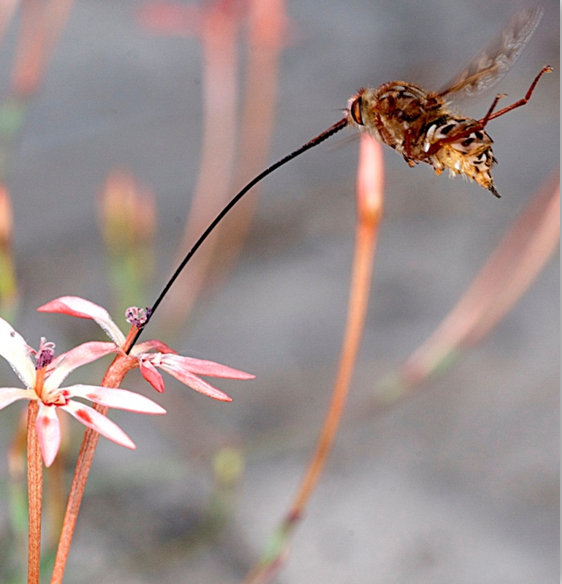
The long-proboscid fly (Moegistorhynchus longirostris) and the long-tubed iris (Lapeirousia anceps) in the Cape Floristic Region (Photo Credit: A Pauw).

Long-tongued pollinators shed light on coevolutionary dynamics

Plants and pollinators have co-evolved physical characteristics that make them more likely to interact successfully. For example, long-proboscid flies, whose tongues are twice the length of their bodies, are able to reach the nectar resources stored deep inside flowers with long straw-like stems. In turn, this interaction is beneficial to the plant because while accessing the nectar, these specialised pollinators pick up pollen and move it to other flowers of the same species.

Comments Off on Long-tongued pollinators shed light on coevolutionary dynamics
Read more about the article Sharing the same looks
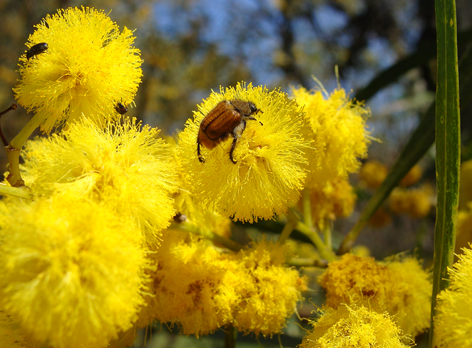
Monkey beetles (Scarabaeidae: Hoplinii) were observed as visitors to Acacia saligna flower heads.

Sharing the same looks

Can the colors or shapes of invasive plants tell us how they interact with native plants? Tackling the question, C·I·B student, Michelle Gibson and supervisors, Dave Richardson and Anton Pauw, used the problematic invasive Australian Acacia saligna to determine whether floral traits (characteristics) can be used to predict the impact of this invasive on co-occurring native plants in the Cape Floristic Region.

Comments Off on Sharing the same looks
Read more about the article Genetic markers suggest alien fruit fly is using human transport to invade South Africa
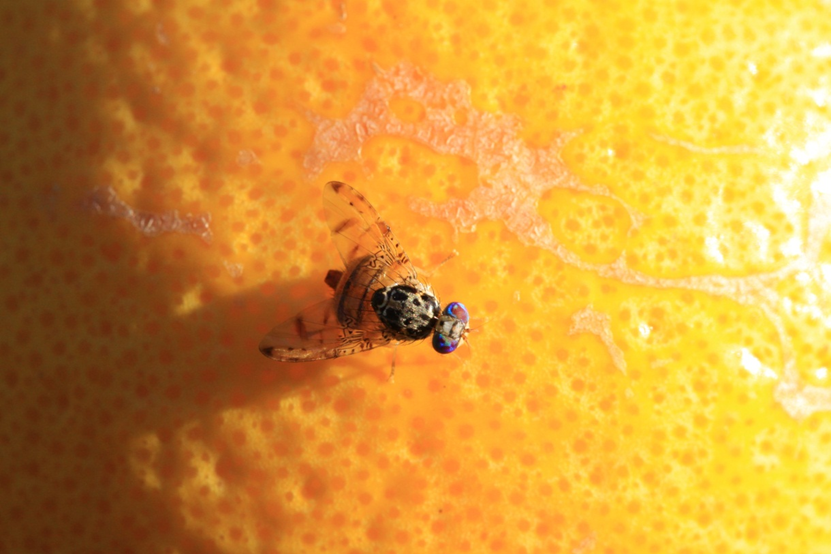
Ceratitis capitata female (Photo: Pia Addison)

Genetic markers suggest alien fruit fly is using human transport to invade South Africa

The Mediterranean fruit fly, Ceratitis capitata, is a highly invasive species throughout the world and is considered one of the world’s most devastating insect pests. In South Africa, the costs of crop losses and control operations exceed R18 million per annum.

Comments Off on Genetic markers suggest alien fruit fly is using human transport to invade South Africa