Sharing the same space – interactions among invaders
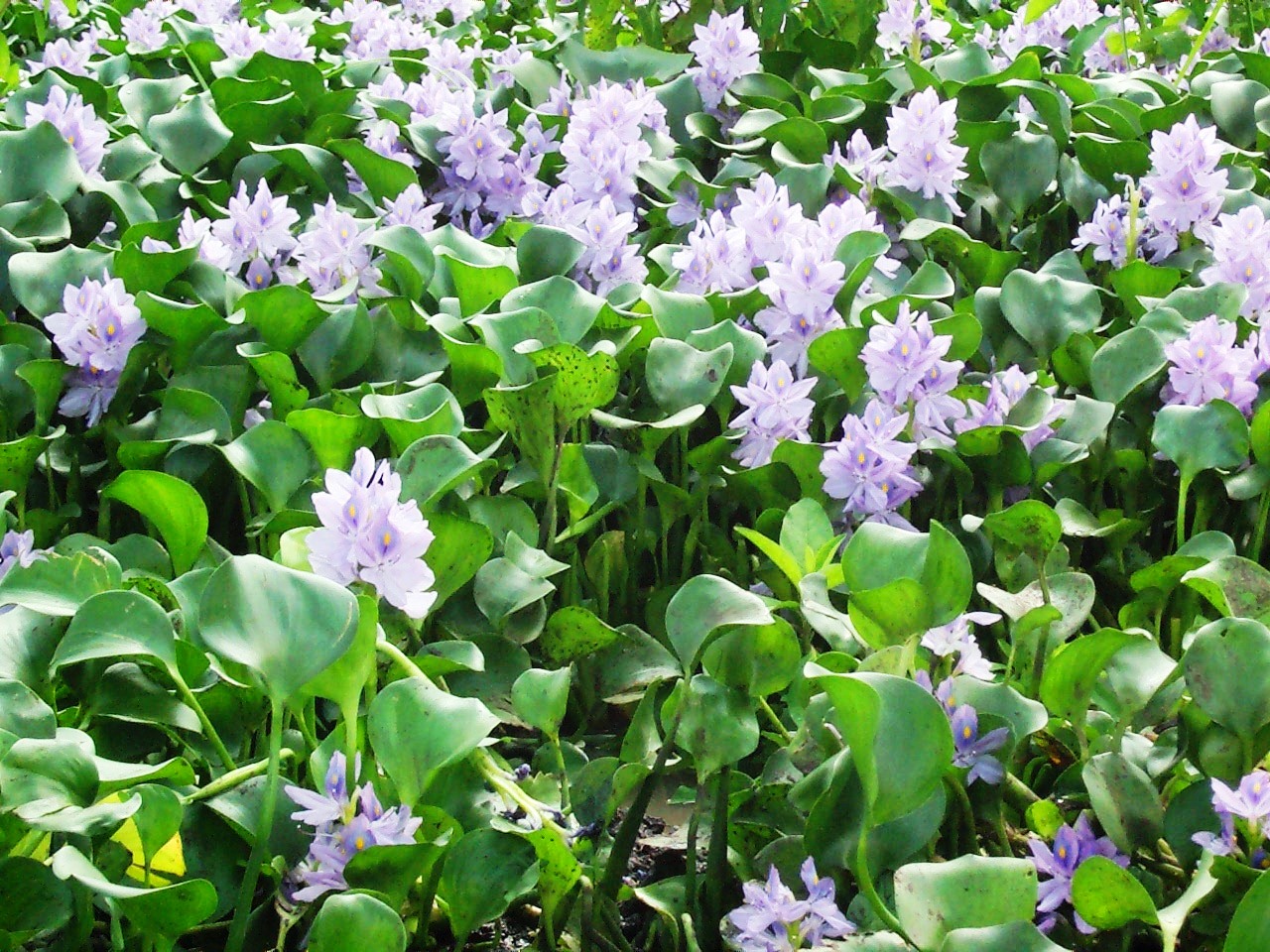
The rates at which invasive species invade new areas are increasing now more than ever. As more invasive species are introduced around the globe, many invaders co-exist in the same areas.
Global biodiversity is declining at an alarming rate. Causes of these declines include the destruction of natural habitats as a result of human development, and the introduction of non-native species.
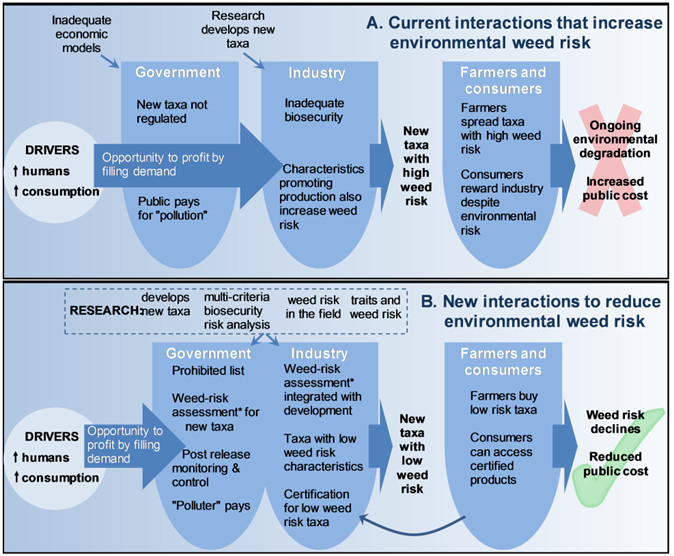
The new approach of ‘sustainable intensification’ in the livestock industry aims to increase food production from existing farmland while minimising pressure on the environment. While beneficial in many respects, this approach poses a major environmental risk, since many newly developed pasture plants pose a high risk of becoming invasive.
Researchers at the Centre for Invasion Biology (C·I·B) are among the contributors to a new academic textbook that examines what will happen to invasive species with current and expected man-made climate change. The book, entitled “Invasive Species and Global Climate Change” describes the distribution, success, spread and impact of invasive species for a series of case studies from countries around the globe.
Climate change is predicted to have serious consequences for people, who will be exposed to natural disasters such as floods, droughts, fires and coastal storm surges that are linked to climate change. It is further predicted that climate change will be inevitable, even under the most optimistic of scenarios, as the world continues its commitment to the use of fossil fuels.