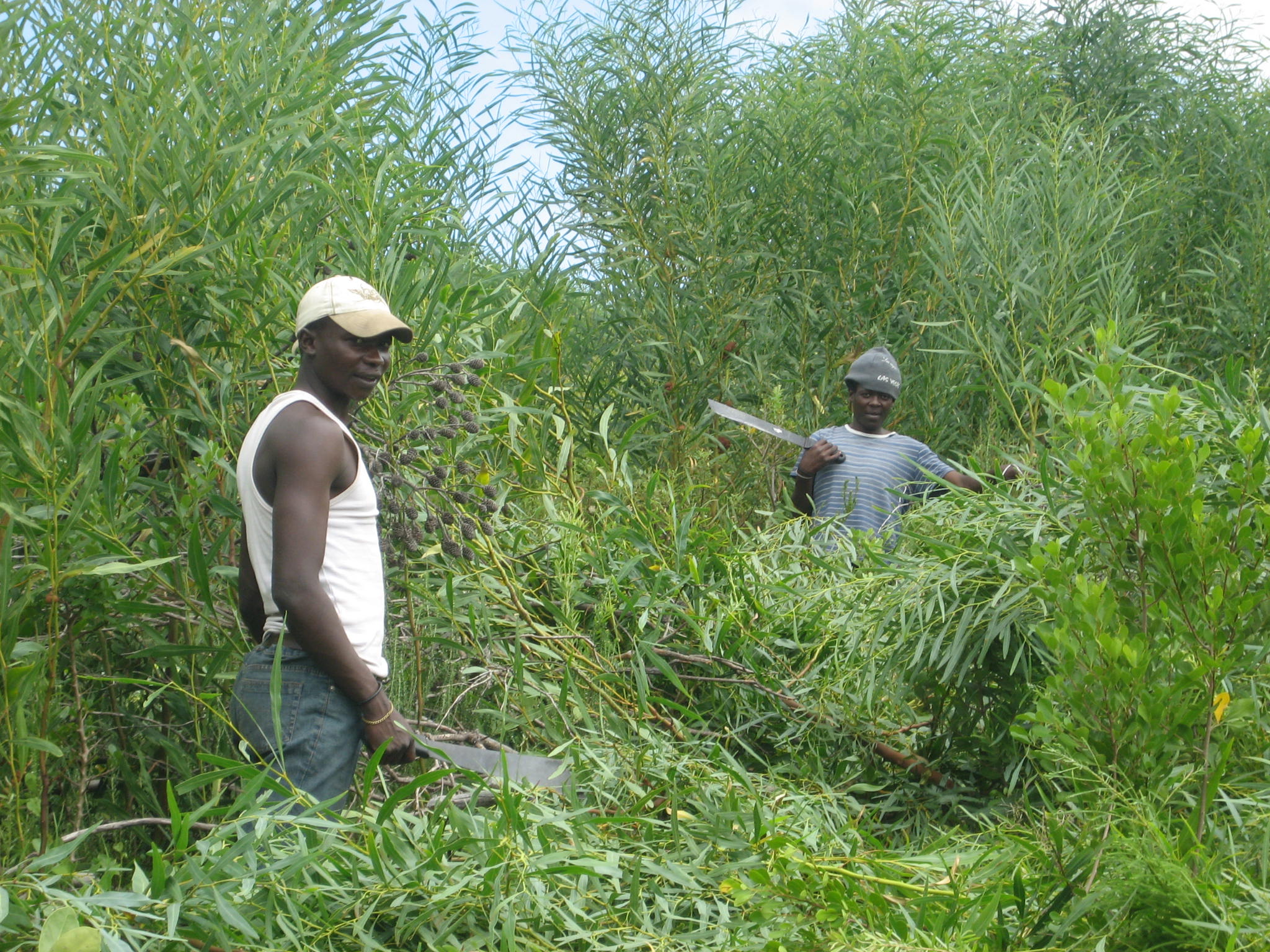
‘High-impact’ invaders merit priority treatment
The magnitude of biological invasions is increasing world-wide. Areas affected by alien plant invasions are continuously expanding and the extent and complexity of their impacts are increasing.
The management of invasive species is made more complex when more than one invasive species is present in a given ecosystem at the same time. Several invasive species may have a greater effect than one species does alone and there can be synergistic effects that result in a cascade of impacts and a large change in the way the ecosystem functions.
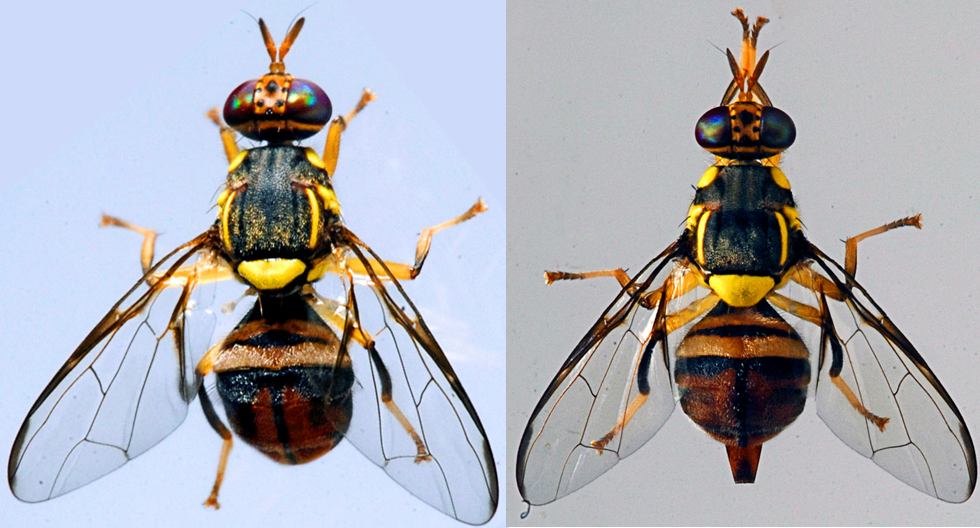
Fruit flies are major economic pests throughout the world, causing huge economic losses to commercial fruit production. Some of the most notorious invasive species cause widespread damage by puncturing the fruit during egg laying and leaving the larvae to develop in the fruit.
Biological invasions are taking place at an increasing rate, causing environmental and economic problems worldwide. It is therefore important to be able to predict and identify those species that may have damaging ecological impacts.
C·I·B core team member Prof. Melodie McGeoch and C·I·B post-doc Dr Dian Spear were co-authors of a recent report in Science that has received substantial global press coverage. The study synthesises the outcomes of global indicators of biodiversity threat to establish whether or not nations have honoured their commitment to reducing biodiversity loss.